Is Qigong Real? What the Science Actually Shows (2026)

Quick answer: as a mind-body practice, qigong is real. Dozens of randomised trials and meta-analyses document genuine, measurable effects on blood pressure, anxiety, depression, chronic pain, sleep and balance. What is not supported by science is the supernatural layer: “external qi” healing at a distance, supernatural feats, and cure-all promises. If a teacher promises miracles, walk away. If they tell you to practise, breathe and stand — you are in the right place.
That honest split — real practice, exaggerated claims — is exactly the ground this article covers, using the actual trial data rather than folklore in either direction. You can see the full trial-by-trial breakdown in our Science of Qigong research hub; here is the verdict it supports.
What qigong actually is
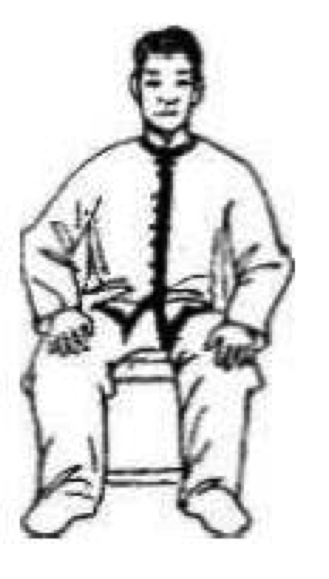
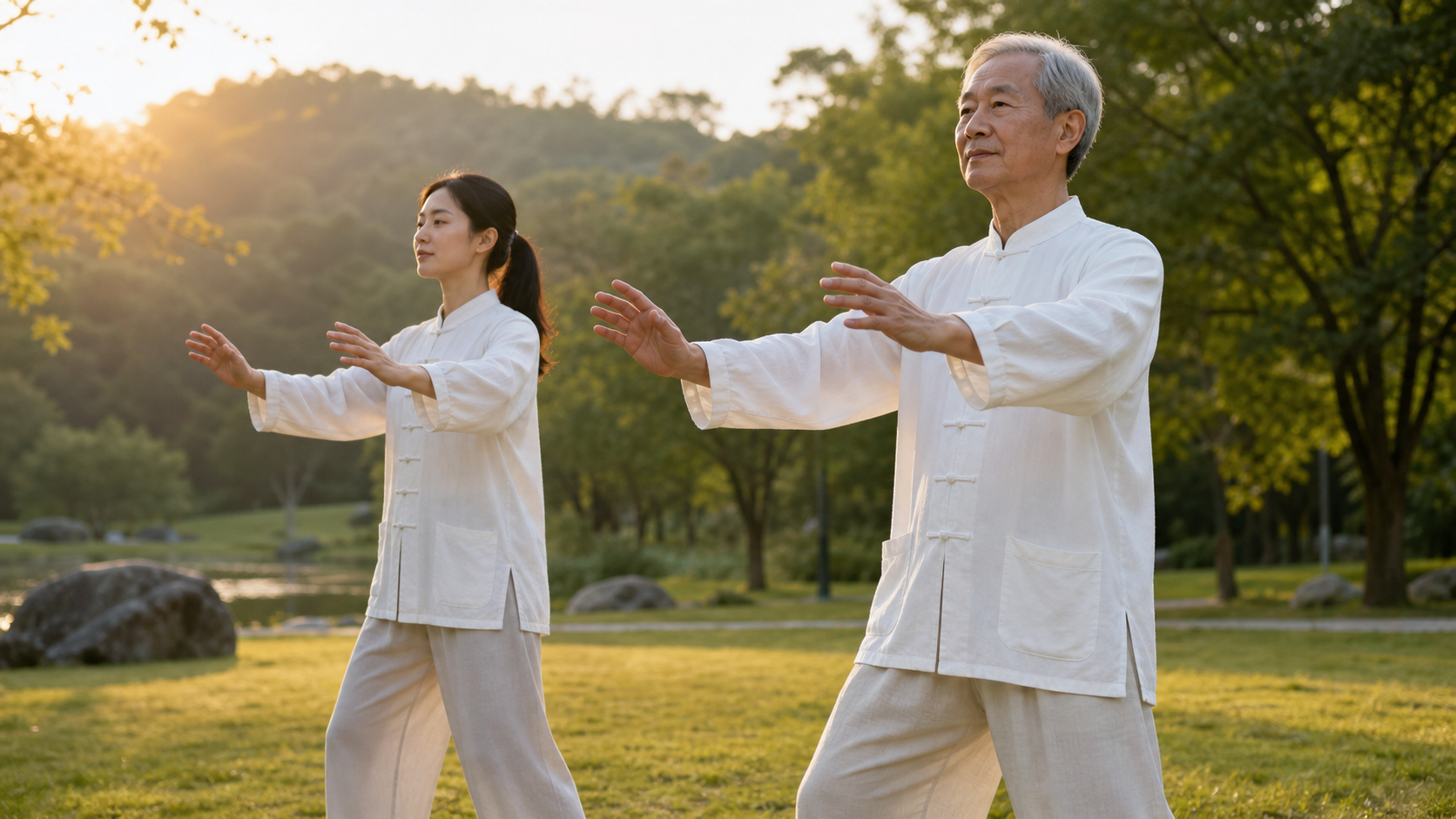
Strip away the mysticism and qigong is a training system built on three things: correct posture (usually standing, sometimes seated or in gentle motion), slow breathing (diaphragmatic, with long exhales), and sustained gentle attention. Practised together, they shift the body out of stress mode and into a state of calm alertness. The tradition is several thousand years old and branches into medical qigong (health), martial qigong (power) and spiritual qigong (meditation) — but the core is the same, and none of it requires belief in anything.
It is not a religion, it is not a replacement for medicine, and it is not magic. It is a 15-minute daily skill, closer to the way breathwork or balance training works than to the way a séance works. If you are new to the terminology, our beginner’s guide to qigong and the 40+ question FAQ cover the basics in plain language.
Where the evidence is strong
These are the outcomes where randomised trials give a consistent answer. Each links to our plain-English review of the underlying studies — what was measured, in whom, and how big the effect was:
| Outcome | Key evidence | What was found |
|---|---|---|
| Blood pressure & heart health | 12-month randomised trial, 342 adults (JAMA) | Tai chi/qigong lowered systolic blood pressure more than a matched aerobic exercise programme. Review ? |
| Anxiety, depression & stress | Review of 40 studies, 3,800+ participants | Moderate-to-large effects on stress, anxiety and mood versus control groups. Review ? |
| Balance & falls | NEJM trial in Parkinson’s disease | Tai chi cut fall incidence by about two-thirds versus a stretching programme — one of the best fall-prevention results in any exercise. Review ? |
| Chronic pain | Trial-based reviews, incl. chronic low back pain | Meaningful pain and function improvements with gentle daily practice. Review ? |
| Cancer recovery | Trial-based reviews (quality of life, symptoms) | Improved quality of life and symptom burden as a complement to treatment. Review ? |
| COPD & sleep | Respiratory and sleep research | Breathing efficiency and sleep quality improvements in clinical populations. Review ? |
The pattern across all of them: the effects are real, they are measurable, and they are comparable to — and in a few outcomes better than — standard exercise controls. That is not what you expect from “magic energy”; it is what you expect from a well-designed movement-breath-attention training system.
Where the evidence is weak or absent
Equally important is what the data does not support:
- “Boosts immunity by X%.” Individual studies have found shifts in markers like telomere length and inflammatory cytokines (IL-6), but results are inconsistent and small. Any fixed percentage claim you see online is marketing, not science.
- Measurable energy fields. The idea of qi as a physical field around the body that can be scanned or transmitted has not been reproducibly demonstrated. (See our honest look at energy medicine and biofields.)
- Longevity. Long-term observational data is suggestive but cannot prove that qigong adds years. It improves the things that support a longer, better life — stress, balance, mobility, sleep.
- Curing disease. Qigong improves how people live with and recover from chronic conditions. It does not replace medical treatment, and anyone telling you otherwise is selling something.
Holding both halves at once — strong evidence for the practice, none for the supernatural claims — is not a contradiction. It is what the data actually says.
Why it works without measurable “qi”
The mechanisms that are measurable are the same ones behind all validated mind-body practices:
- The autonomic nervous system. Slow breathing with extended exhales activates the parasympathetic “recovery” system. This is direct physiology — heart rate, blood pressure and stress hormones respond to the breath pattern itself.
- Attention. Sustained, gentle focus on a simple object (the breath, the dantian, the hands) reduces the default-mode rumination that anxious and stressed minds get stuck in. You can read more about this in our guide to qigong, neigong and the nervous system.
- Movement. Slow, coordinated, low-load movement improves circulation, joint range and motor control — with almost none of the impact stress that wear-and-tear exercise creates.
- The felt sense of energy. The warmth, tingling and fullness students report is real — as a perceptual state. It is the body’s interoceptive signal that the stress response has downshifted. You don’t need to call it qi to benefit from it; the tradition’s language is just the older name for the same experience (see how to feel chi: the complete beginner’s guide).
“Qi” is the traditional language for these measurable states. That’s why the practice works whether or not you believe in energy fields — the breath, the posture and the attention do the work.
The 1990s qigong fever — and how to spot a scam today
In the late 1980s and 1990s, China’s “qigong fever” saw millions take up the practice — along with a flood of exaggerated and fraudulent claims: external-qi healings for a fee, cures for serious disease, and supernatural demonstrations. The government eventually cracked down on the fraudulent practitioners, and legitimate lineages survived by doing one thing: teaching people to practise for themselves.
That same test works today. Three red flags of a scam:
- Paid “remote healing” with promised medical outcomes. A healer who claims their hands (or their “field”) will fix a specific condition for a fee.
- Instant results, guaranteed. Energy work does not work like a pill. Real progress is measured in weeks and months of daily practice.
- Secret knowledge you must buy before you can test anything. Legitimate teachers give you something to do first — a posture, a breathing method — and let your own results be the argument.
The mirror image is easy too: a legitimate teacher points at your practice as the source of change, has a verifiable background, and measures success in your consistent daily routine — not in their aura. That is the standard this site holds itself to, and it is why everything here starts with a practice you can do today, for free: the 10-day standing qigong guide.
Verdict: what to believe
| Claim | Verdict |
|---|---|
| Qigong improves balance and prevents falls in older adults and Parkinson’s patients | Strong evidence |
| Qigong lowers blood pressure | Strong evidence (12-month RCT, 342 adults) |
| Qigong reduces stress, anxiety and depression | Moderate-to-strong (40 studies, 3,800+ participants) |
| Qigong improves sleep and eases chronic pain | Moderate evidence |
| Qigong supports cancer recovery (quality of life, symptoms) | Moderate evidence — as a complement, never a replacement |
| Qigong boosts the immune system | Preliminary and inconsistent — treat fixed percentages as marketing |
| “External qi” heals at a distance | No reproducible evidence |
| Qigong cures disease | No — it is a complement to medical care |
The practice is real. The miracles are not. Start where the evidence and the tradition agree: stand, breathe, pay attention, and do it daily. Your body’s response — calmer sleep, steadier energy, less pain — is the data point that matters most.
Frequently asked questions
Is qigong real or fake?
As a mind-body practice, qigong is real: systematic reviews document genuine improvements in blood pressure, anxiety, depression, pain, sleep and balance from regular practice. What is not supported by evidence are the supernatural claims — external qi healing at a distance, supernatural feats, and cure-all promises.
Does qigong work? What does the science say?
For specific outcomes, yes: a 12-month randomised trial of 342 adults found tai chi lowered systolic blood pressure more than aerobic exercise; a review of 40 studies with over 3,800 participants found moderate-to-large effects on stress, anxiety and mood; and in Parkinson’s disease, tai chi cut falls by about two-thirds versus stretching. For claims like immune boosting, the evidence is mixed and weaker.
Why does qigong work if qi isn’t measurable?
The measurable mechanisms are the same as in all mind-body practices: slow deep breathing shifts the autonomic nervous system from stress to recovery, sustained attention calms the brain’s default network, and slow coordinated movement improves circulation and motor control. You don’t need to believe in energy fields to benefit.
How is qigong different from a scam energy healing practice?
Legitimate qigong is self-practice: you cultivate your own health through posture, breath and attention, and teachers are judged by your results over months. Scam energy healing sells external effects — a healer working at a distance for a fee, instant cures, or guaranteed outcomes. Real teachers say practice, not their hands, is what changes your health.
Did the qigong studies have methodological problems?
Some did — many trials are small and some lack proper blinding, which is hard in movement research. The stronger recent work — large randomised trials published in JAMA and the New England Journal of Medicine — still shows robust effects on blood pressure, falls and balance.
Keep exploring: For a careful look at traditional Qigong maps, read Qigong Esoteric Anatomy. For practice options, use the Start Here guide.