The Marrow-Washing Daily Protocol: A Free Guide to Xi Sui Jing
A free guide to Xi Sui Jing — the marrow-washing practice. Seven short chapters, each ending in something you can do today. No equipment. Ten minutes a day.

Introduction: The dry sponge problem
If you feel like you are slowing down, you probably blame your age, your diet, or the fact that you haven’t hit the gym in three weeks. You look in the mirror and see the skin getting looser. You feel your muscles getting tighter. So you do what everyone does. You buy a better moisturiser. You lift some weights. You run until your knees hurt.
None of that touches the source.
Here is the glitch in how we think about health: we treat the body like a suit of clothes. We assume that if we fix the fabric on the outside, the person inside will be fine. But your vitality is not stored in your biceps or your skin. It is manufactured deep inside the hardest, most neglected parts of your body. It lives in your bones.
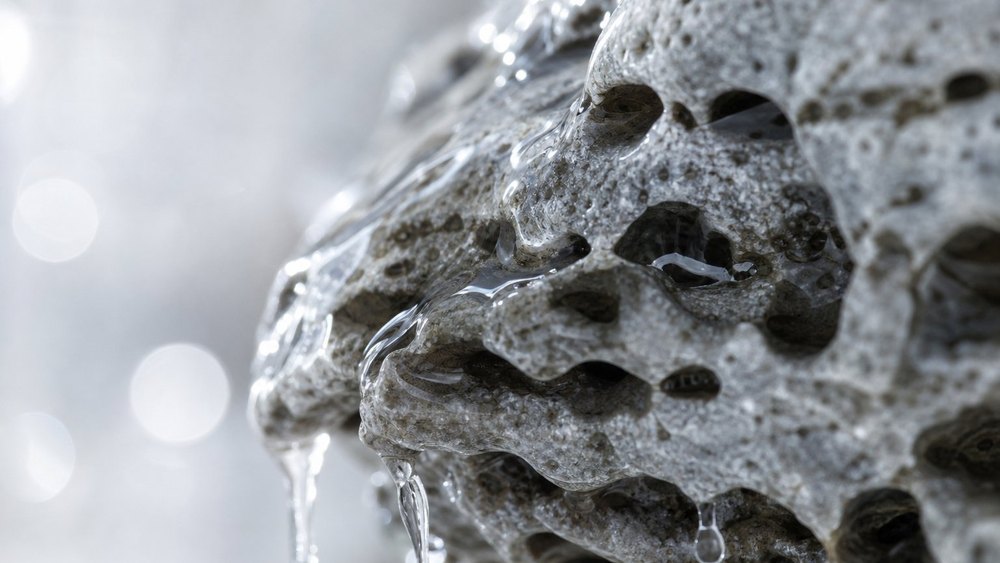
Think of your bones like a sponge. When you are young, that sponge is dripping wet — full of red and yellow marrow, constantly producing blood cells. As the years go by, the sponge starts to dry out. It gets brittle. The fluid inside stops moving. When the marrow dries up, you begin to rust from the inside out.
Most fitness routines are polishing the surface of a dry sponge. You can lift all the weights you want, but if the marrow is stagnant you are building muscle on a crumbling foundation. This is why you feel stale even when you are technically fit.
The reframe is a shift in focus: away from working out, toward internal irrigation.
This protocol is based on an old system called Xi Sui Jing, or Marrow Washing. It sounds mystical. It is actually quite mechanical — a way of using breath, internal pressure and specific vibrations to move fluid and sensation into places ordinary exercise never reaches. We are turning the dry sponge back into a wet one.
The four pillars
This is not a workout plan. It is a way of interacting with your own structure.
1. The bone as a battery
Stop thinking of your skeleton as a structural frame like the timber in a house. Think of it as a pressurised storage system. Everything in this protocol is about keeping that battery charged.
2. Internal irrigation
Blood flow is easy — you run, and the heart pumps. Marrow flow is harder. It asks for specific movement and breath. We use the body’s own mechanics to squeeze the bones.
3. The demand signal
The body is economical. It does not send resources where they are not requested. Rhythmic, controlled loading of the skeleton is how you make the request.
4. Structural resonance
Vibration travels through bone faster than through muscle. We use tapping and vocalisation to create a vibration you can feel in your teeth. That buzz is the practice working.
Quick-start checklist
You don’t need a gym. Do these today to get a feel for the shift.
- Audit your stance. Stand up. Don’t lock your knees. Feel your weight sinking into your heels. Imagine your bones are hollow pipes and the weight is liquid pouring down them.
- The bone tap. With a loose fist, gently tap your collarbones, sternum and the tops of your hips. Feel the vibration travel.
- The compressed breath. Breathe in. Hold gently for a few seconds and let the pressure settle downward into the belly. Do not strain or bear down.
- Mineral hydration. Drink a glass of water. Bones need minerals as well as fluid.
- Decompress the spine. Hang from a bar, or simply lean forward over a counter and let the spine lengthen.
- Shift the goal. Before bed, don’t count calories burned. Ask whether you felt the inner glow of the bones. It is a different kind of tired.
Chapter 1 — The heavy metal flush: bone tapping
There is a specific exhaustion that a nap does not fix. It is structural. Your bones feel like lead and brittle at the same time. You wake and your joints feel like they have sand in them. This is the drying out of the marrow.
Bone is alive. It is porous. It is also piezoelectric — it generates a small electrical charge under pressure or vibration. This is real physics, documented since the 1950s, and it is part of how bone senses load and remodels itself.
Think of a pool filter clogged with sediment. Wiping the surface does nothing. You have to knock the housing to loosen what has settled, so water can flow through and carry it away. Tapping uses mechanical vibration to do that.
The protocol: five-minute structural wake-up
Do not do this with tension in your muscles. If your muscles are tight, the vibration stays on the surface. You want to be loose meat on the bone.
- Stand with feet shoulder-width, knees slightly bent, arms hanging. Shake the whole body for thirty seconds to loosen your muscles’ grip on the frame.
- Make a loose, hollow fist. Tap from the top of the left shoulder, down the outside of the arm to the wrist, then back up the inside. Three passes. Listen for a steady, rhythmic thud — like knocking on a door.
- Repeat on the right. Notice whether one side sounds duller.
- Move to the legs, where the large marrow reservoirs are. Tap from the hips down the outside of the thighs to the ankles, then up the inside. Firm but respectful.
- Finish around the hips and lower back, then very lightly tap the sternum with fingertips only.
- Stand still for sixty seconds. Eyes closed. Feel the fizz.
Do not tap over the spine, kidneys, throat, face, or any area of injury, recent surgery or known low bone density. If tapping hurts, you are hitting too hard.
Tapping is a close cousin of the standing work in the free 10-day Zhan Zhuang standing guide. If you have not built a standing base yet, start there.
Chapter 2 — Marrow breathing
Let me be clear about something immediately. You are not breathing air into your bones. Your lungs have no secret passage to your femur. What we are doing is combining breath, gentle internal pressure and focused attention so that circulation and sensation are drawn inward, toward the core of the limbs.
In the old texts: where the mind goes, the Qi flows. Call it Qi, or call it attention and blood flow. The instruction works either way.
When you first start, it feels like nothing. You will sit there trying to breathe through your skin and feel like you are playing make-believe. That is the hurdle. We are so used to no pain, no gain that if we are not gasping we assume nothing is happening. This is subtle work. It is like trying to hear a faint sound in a noisy room. You have to get quiet.
The protocol: ten minutes
Sit or stand with the spine straight. Bring your awareness to your shins or forearms — the easiest places to start, because the bone is close to the surface.
As you inhale, imagine you are drawing in through the skin of the limb, toward the centre of the bone. Feel a gentle sense of condensing. Not bracing, not clenching. More like a slow gathering inward.
As you exhale, imagine grey, stale fatigue leaving through your fingertips and toes — while the sense of fullness stays in the bone.
Ten minutes. Don’t expect transformation on day one. Look for the flicker of sensation.
This is the same breath architecture taught in Katsumi Niikura’s Ki Breathing Basic Four — the method Sifu Dan Ferrera trained in as senior instructor for three and a half years. If marrow breathing feels vague, that page gives you the mechanical version first.
Chapter 3 — Sealing the leaky dantian
You know that tiredness sleep doesn’t touch. That hollow feeling in the centre of the gut. Through the lens of this protocol, what you are feeling is a pressure leak. You are running a high-performance engine on a tank with a hairline crack in it.
Think of a garden hose with a dozen pinpricks along its length. It doesn’t matter how far you open the tap at the wall — the water dribbles out of the nozzle. The pressure is gone before it arrives.
The leak happens in three places: how you breathe, how you stand, and how you carry your pelvic floor. Most of us spend the day in mild collapse — slouched, breathing into the very top of the chest. Shallow breathing signals low-level alarm to the nervous system.
Most people treat health as additive: more supplements, more workouts. Usually the first step is subtractive. Stop the leak. Filling a bath without the plug in is exhausting and pointless.
The protocol: the constant audit
Think of the pelvis as a bowl of water. Tip it forward and the water spills out the front; tip it back and it spills behind. Most of us are spilling all day. Find the level centre.
Then, the seal at the base: a gentle lift of the pelvic floor. Not a gym-style clench — a soft engagement you could hold for minutes without strain.
Every time you are waiting in a queue, sitting at a red light, standing at the sink: check the seal. Lift slightly. Breathe into the space behind the navel.
For the anatomy underneath this, read What is the Dantian, and how to activate it safely.
Chapter 4 — Internal vibration
Think of an ultrasonic jewellery cleaner. You drop a dirty ring into plain water and the machine hums. No brushes, no chemicals — just a frequency that shakes the grime off the metal. That is the principle here.
The most common mistake is trying too hard. People think vibration means tense up and shake. It is the opposite. Tension blocks internal resonance completely. You have to be heavy-relaxed — grounded like a mountain, fluid like silk on a frame.
The protocol: heel-drop resonance
Stand with feet shoulder-width, knees soft, arms hanging like dead weight. Rise onto the balls of the feet — an inch, no more — then let yourself settle back onto the heels. You are not jumping. Gravity does the work.
Stay relaxed as you land. Let the skeleton receive it rather than bracing against it. As you drop, make a low hmmm in the back of the throat, and try to match the hum to the feeling of the impact.
One drop. Wait. Feel it echo. Then another. Five minutes.
Skip this entirely if you have osteoporosis or reduced bone density, disc injury, joint replacements, retinal issues, or if you are pregnant. Heel drops send impact directly up the spine. When in doubt, do the tapping instead — it achieves a similar thing far more gently.
The rhythmic, weighted quality you are after here is exactly what the Tai Chi Ruler practice trains. The ruler gives your hands something to move against, which makes the whole-body wave much easier to find than it is in empty air.
Chapter 5 — Cultivating the Golden Elixir
People hear Golden Elixir and imagine a mythical potion. The traditional referent is considerably more ordinary: saliva.
Specifically, a thin, cool, slightly sweet saliva that appears when the jaw is relaxed and the nervous system has settled. The old texts call it Sweet Dew. There is no mystery to the mechanism — a relaxed, parasympathetic state produces thinner saliva than a stressed one. What matters is that it is a reliable, honest signal you can feel. When it appears, you are relaxed. When your mouth is dry, you are not.
The protocol: the internal swallow
Through the day, check your jaw. Most of us carry enough tension there to crack a nut. Let the tongue drop from the roof of the mouth. Let the teeth part slightly.
When moisture begins to pool, don’t swallow it absently. Gather it — circle the tongue around the inside of the teeth a few times. Then swallow with attention, and picture the fluid soaking downward into the spine.
This will feel like make-believe at first. That is fine. You are training attention to travel inward, past the muscles. Ten times a day.
Chapter 6 — The long view
Here is where I want to be careful with you, because this is where this kind of material usually overreaches.
You will see claims that marrow practices lengthen telomeres, reverse ageing, or release stem cells on demand. The honest position: there is no good evidence that Qigong does any of those things, and anyone promising it is selling something.
What is reasonably supported is narrower and still worth having. Weight-bearing and impact loading influence bone remodelling. Slow breathing shifts autonomic balance. Standing and balance practice reduces fall risk in older adults — and for anyone over sixty, avoiding a hip fracture is worth more than any theory about telomeres.
Practise this because it makes you feel more inhabited, more grounded, less brittle in your own frame. Those are real, and you can verify them yourself in a few weeks. Everything beyond that is decoration.
Chapter 7 — The 24-hour integration
Most people treat health as a chore to tick off. Green juice, forty-five minutes at the gym, box checked. Then three o’clock arrives and the fog settles in anyway.
We have been taught that vitality is something you do and then leave behind. But if the morning session is the only moment the practice exists, you are productive for twenty minutes out of a thousand and forty.
Think of a sponge left in the sun. Hard and brittle. Throwing it into a bucket for a second wets the outside while the core stays dry. You have to submerge and squeeze repeatedly. The morning protocol is the soak; the rest of the day is the squeeze.
The protocol: micro-oscillations
You don’t need to do a full set in the middle of a meeting. Instead, carry the flavour of the practice into stillness.
Every time you transition between activities — getting out of the car, ending a call, standing up from your desk — take three marrow breaths. Draw the breath toward the centre of the long bones. Feel the pressure settle. Five seconds.
That is the difference between a system that dries out and one that is continually renewed.
Where to go next
If you want a teacher rather than a page, these three follow naturally:
- Katsumi Niikura’s Ki Breathing Basic Four — free. The breath mechanics underneath Chapter 2, taught as a concrete four-part method rather than an image.
- Tai Chi Ruler Qigong — the rhythmic whole-body wave from Chapter 4, with a physical object to move against. The easiest way to find the motion if heel drops are not suitable for you.
- Sifu Dan Ferrera Qigong Class — a filmed full-length class. Useful if you learn better by watching a session run start to finish than by reading instructions.
New to all of this? Begin with Qigong 101, the root practice behind every course here, or the free 10-day standing guide.
Xi Sui Jing is traditionally taught alongside Yi Jin Jing, the tendon-changing classic, and is attributed to the Shaolin tradition. This guide presents the practice as Sifu Dan Ferrera teaches it, in plain language, with the traditional terminology kept and its limits stated honestly.