Frequently Asked Questions About Qi Gong


On this page we answer the most common questions about Qi (also known as Chi and Ki) and about training with Develop Your Energy, the online Qigong and Tai Chi school founded by Sifu Dan Ferrera. We add new information regularly.
What is Develop Your Energy, and how can it benefit my health?
Develop Your Energy gives you access to training and teaching that was once only available through oral tradition. You can train and cultivate internal energy (Qi) at your own pace, in the privacy of your own home. Over the past decades, Develop Your Energy has successfully trained thousands of students.
Is there scientific evidence that Qigong works?
Yes. Randomized controlled trials and meta-analyses show Tai Chi and Qigong improve balance, cognition, sleep, quality of life and chronic pain. A 2024 trial of 350 adults found a 12-week online Tai Chi and Qigong program significantly reduced low back pain disability, and a 2023 meta-regression of 17 randomized studies found gains in physical and cognitive function in older adults. Harvard’s Osher Center hosted an international research conference on Tai Chi and Qigong in 2026. Read our summary of the research, or the condition-specific reviews: anxiety & depression, blood pressure, Parkinson’s & stroke, back pain, cancer recovery, COPD & sleep.
Are these methods suitable for beginners?
Yes. These methods are designed to be accessible for complete beginners as well as practitioners looking to deepen their foundation. Each course includes step-by-step progression, with safety considerations built in.
What is Qi, Chi, or Ki?
Chi, Qi, and Ki are different words for the same thing: life-force energy, which translates as “breath.” You will often hear the word “gong” or “kung” after these prefixes. Gong (kung) means development, so Qigong (Chi Kung) literally means “developing the life-force energy.” The courses on this site teach you how to build that energy.
How does Chi affect my life?
Chi is in all living things; without it, there is no life. As we go through our daily lives we use up this life-force energy. Negative emotions such as fear, anger, hate, and anxiety also burn it up — each negative emotion can become stored in the organs, depleting our life force over time. Strong, powerful Qi is developed through Qigong practice, and this site gives you the tools to build powerful, balanced yin and yang life-force energy.
What is Yin and Yang energy?
Yin and Yang are two ways of describing the totality of universal energy. The universe consists of both yin (?) and yang (+) charges, and everything in the physical world is made of both — just as atoms are made of positive protons and negative electrons. For the women reading this, we call yin “receptive” rather than negative; for men, we call yang “active.” When building Qi, you must balance both yin and yang exercises. Yin energy tends to be cool, attracts, and brings insight; yang energy tends to be hot, repels, and projects.
What can Yin and Yang energy be used for?
Yang energy is expansive and hot. It can be used for moving objects, pushing out sickness, repelling negative energy, heating the body, and — martially — for self-defense. Too much yang becomes very hot and can harm the organs or the people around you. Yin energy is receptive and cool: it can cool the body and lets you receive and read the energy of things and people, sense what is about to happen, and attract what you want. Too much yin can leave you passive, worried, and emotionally drained. Our courses give you both active and receptive exercises so your energy stays balanced — balance is the key to power, health, happiness, and a good life force.
How long does it take to become a master?
Qigong is something most serious practitioners take on for a lifetime. With the resources on this site, our courses, and a good mentor, students can start to demonstrate real abilities within 3 months to a year. Most students begin to show remarkable results after about 4 years with at least 2 hours of daily training.
What can skilled Chi or Qi masters do?
Most good masters can heal the sick using their energy and read energy in things and people. Traditional accounts also describe telepathic communication, reading minds, and influencing situations — which can bring unwanted karmic debt if the practitioner is not creating win-win outcomes for everyone involved. Other reported abilities include walking through walls, levitation, and moving objects without touching them. There are three types of Qigong — medical, martial, and spiritual — and this site offers courses in all three, with exercises you can practice for the rest of your life.
What is Chi breathing?
Once you build your energy, the breath can be used to project and amplify Chi. The breath is connected to, and said to be, the life-force energy. By combining mind and breath, you can direct the flow of energy in and out, back and forth. As you grow stronger, the breath is no longer needed and the mind alone projects the energy. The breath and mind work together to direct Qi — remember, in everything you do, where the mind goes, the energy flows.
Choosing a Qigong teacher
Here is an article from my instructor on Qigong and some forms of yoga, followed by two more common questions.
Empty Qigong & Yoga
By Sifu Dan Ferrera
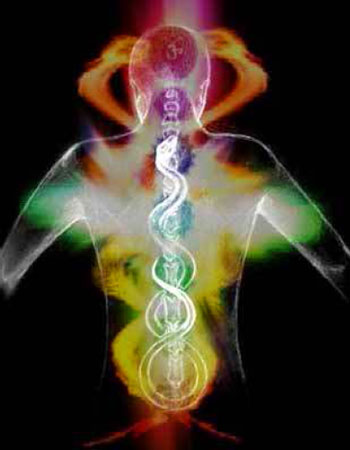
It’s sad to say, but also very true, that the majority of Qigong and Yoga classes available in America are void of their real intended purpose. The same can be said about most Tai Chi as well, since this is a moving form of Qigong. Unfortunately this trend is likely to worsen due to the growing popularity of these internal systems of exercise and spiritual development. In most cases it’s not the teacher’s fault, as they simply learned empty movements, postures or asanas from someone who didn’t have a clue as to what real Yoga or Qigong are all about. It’s just like anything else: “garbage in = garbage out.” Qigong and Yoga are not about stretching and breathing or, in some cases, meditating. Many teachers instruct you to use special breathing that is supposed to accumulate prana or chi, also known as vital life-force energy. However, the majority of these same teachers have no idea what real prana or chi feels like, because the teacher they learned from didn’t either. A word of caution: special breathing techniques don’t accumulate Chi or Prana unless you learn how to both connect to and feel this universal energy with your mind and body. “Well then,” you might ask, “what is real Yoga or Qigong all about?”
Qigong and Yoga are both complete sciences of self-transformation with histories going back many thousands of years. They are real mind-body-spirit sciences that lead inexorably toward the experience of “yoga,” which literally means “union” with the Absolute, the Divine, the Universe, the Tao, Spirit, the One. The first and most crucial step in this process is to connect with and literally feel the living energy (chi, prana, ki) that is both within us and everywhere around us. It is this omnipresent energy that we must learn to physically experience through the practice of real Qigong and/or Yoga, and that guides us on the path to transcendence and absorption in the infinite All.
There are of course real Qigong masters and Yogis in the United States, and this article is meant to honor them for teaching the real thing, as opposed to the many small studios, books and videos teaching empty exercises with no connection to the universal energy that sustains us. For most eager students, it is like ordering a deluxe pizza and getting a plain cheese pizza without knowing the difference. How are you supposed to know if your teacher doesn’t? Remember: garbage in = garbage out. If you don’t have a significant and tangible energetic experience after 3 months of training with your Yoga or Qigong instructor, then you are probably just getting the plain cheese pizza. Most masters will also project energy into their students while teaching them to connect to the universal source, and will have them fairly proficient at the beginning stages of energy work within this relatively short time. The “plain cheese pizza” version of Yoga and Qigong is still good for your health, emotional stress, physical balance, coordination and opening energy channels — but it is lacking the energy work that was the entire reason these systems were preserved for so many millennia.
What should I look for in a Qigong teacher?
First: can you feel the teacher’s Chi? Many claim to have energy but cannot demonstrate it. A real Qigong teacher can display this ability at will, even from thousands of miles away — I have personally spoken with teachers over the phone and felt their energy as though they were in the room. Second, and almost as important, look for a teacher who is emotionally and energetically balanced. Energy follows emotion, and students quickly become energetically connected to their teachers; an unbalanced teacher can cause problems such as organ pain, sadness, fear, dizziness, or worry. Finally, look for a teacher who is non-judgmental, accepts you unconditionally, and encourages you to grow energetically, emotionally, and spiritually.
Which is better: learning Qigong from home or from a teacher at a studio?
A good teacher can teach you effectively with a written course and regular instruction over the phone. Being with a teacher in person has benefits too, but an energetically strong teacher can teach you just as well at a distance — by phone, video, and email — as in person. Our home courses are designed to help you reach your goal of mastery through your own hard work and practice.
Keep learning
- Chi power clothes
- A new look at human energy cultivation
- Understanding Chi cycles
- Zhang Zhuang standing meditation — free 10-day guide
- Browse all Qigong courses
New here? Use the Start Here guide to find the right course for your goal, or read what students say about their results.