Qigong Esoteric Anatomy: Meridians, Dantian & Five Elements
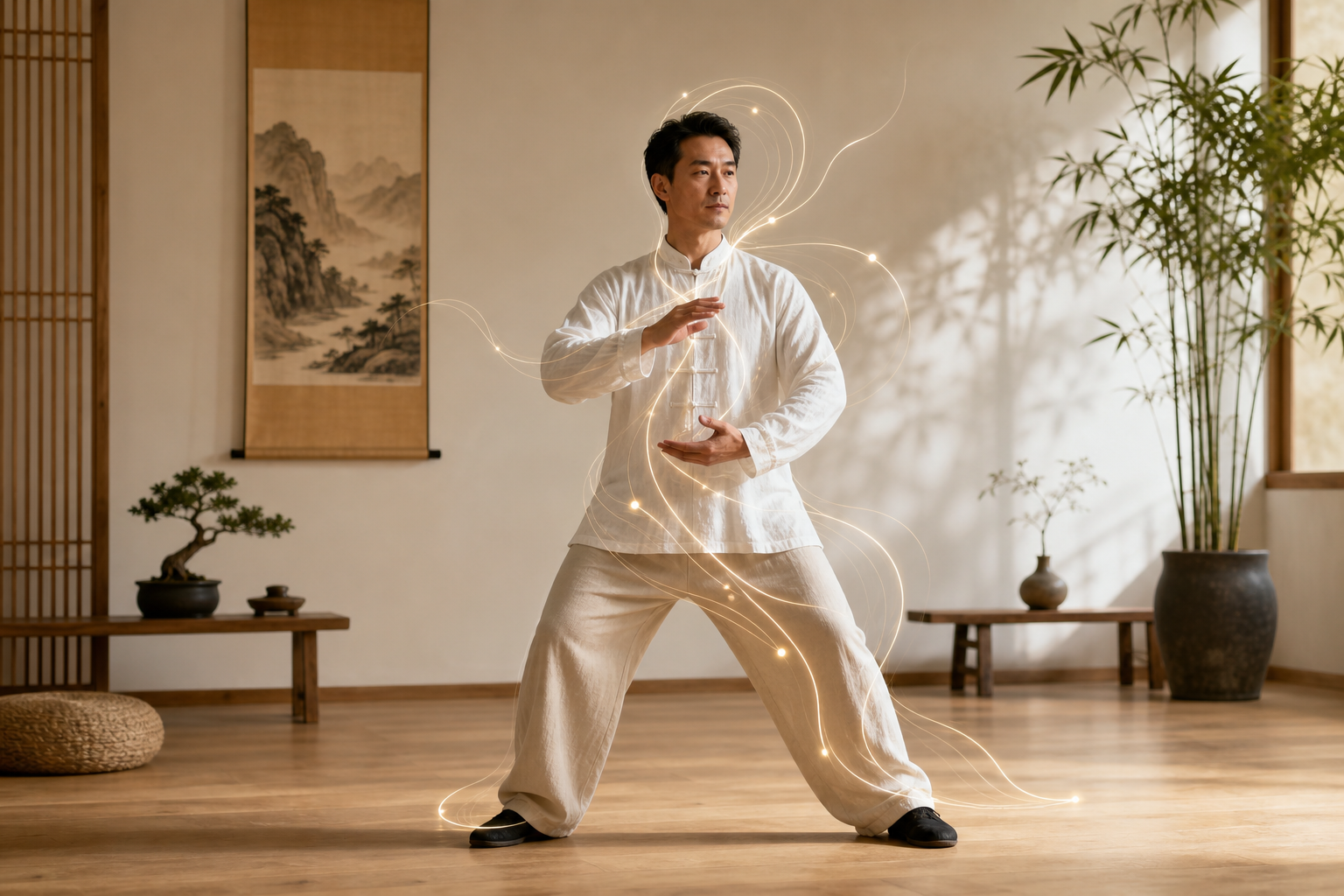
Qigong Esoteric Anatomy
Traditional maps of qi, meridians, dantian, the Five Phases, and the Microcosmic Orbit — explained clearly and without confusing a practice tradition with a medical anatomy textbook.
How to read this page
Qigong uses a language of qi, channels, centers, phases, and circulation. That language comes from Chinese medical, Taoist, Buddhist, and martial traditions, and different schools explain it differently. The maps are best understood as practice frameworks: they give a student a way to place attention, coordinate breathing, understand movement, and organize experience.
That is different from saying that a traditional meridian can be seen as a separate physical tube, or that a dantian is an anatomical gland. Modern research can study Qigong, breathing, movement, acupuncture, balance, pain, and stress without proving every traditional explanation of how those practices work.
Qi and the meridian model
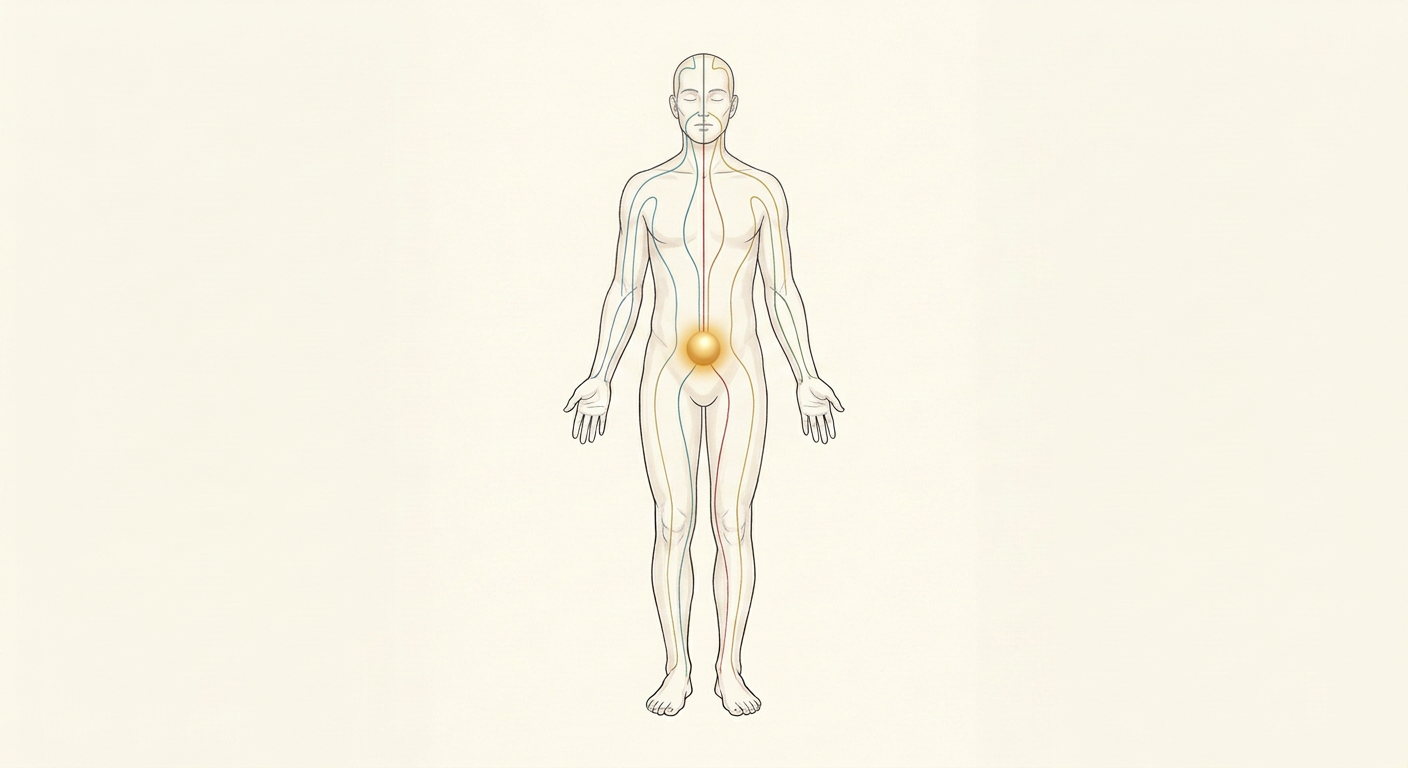
In traditional Chinese medicine and Qigong, qi is a broad concept associated with vitality, function, movement, breath, and change. A meridian or channel is a traditional route used to describe relationships between body regions, functions, sensations, and practice methods.
The standard teaching model includes 12 primary meridians and 8 extraordinary vessels. The Triple Warmer, or San Jiao, is generally counted among the 12 primary meridians. In traditional teaching, it is a functional system rather than a discrete organ that corresponds directly to one structure in modern anatomy.
The dantian: practice centers, not organs
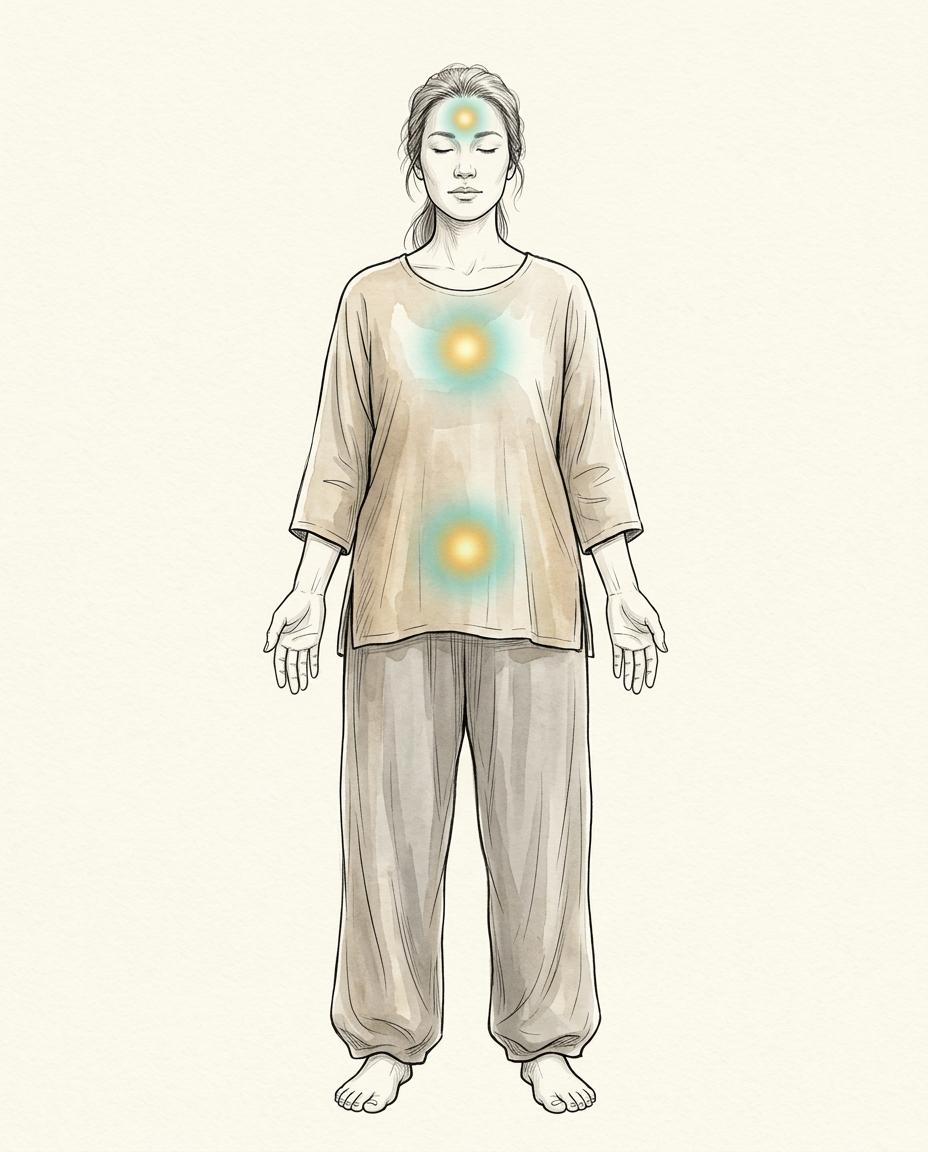
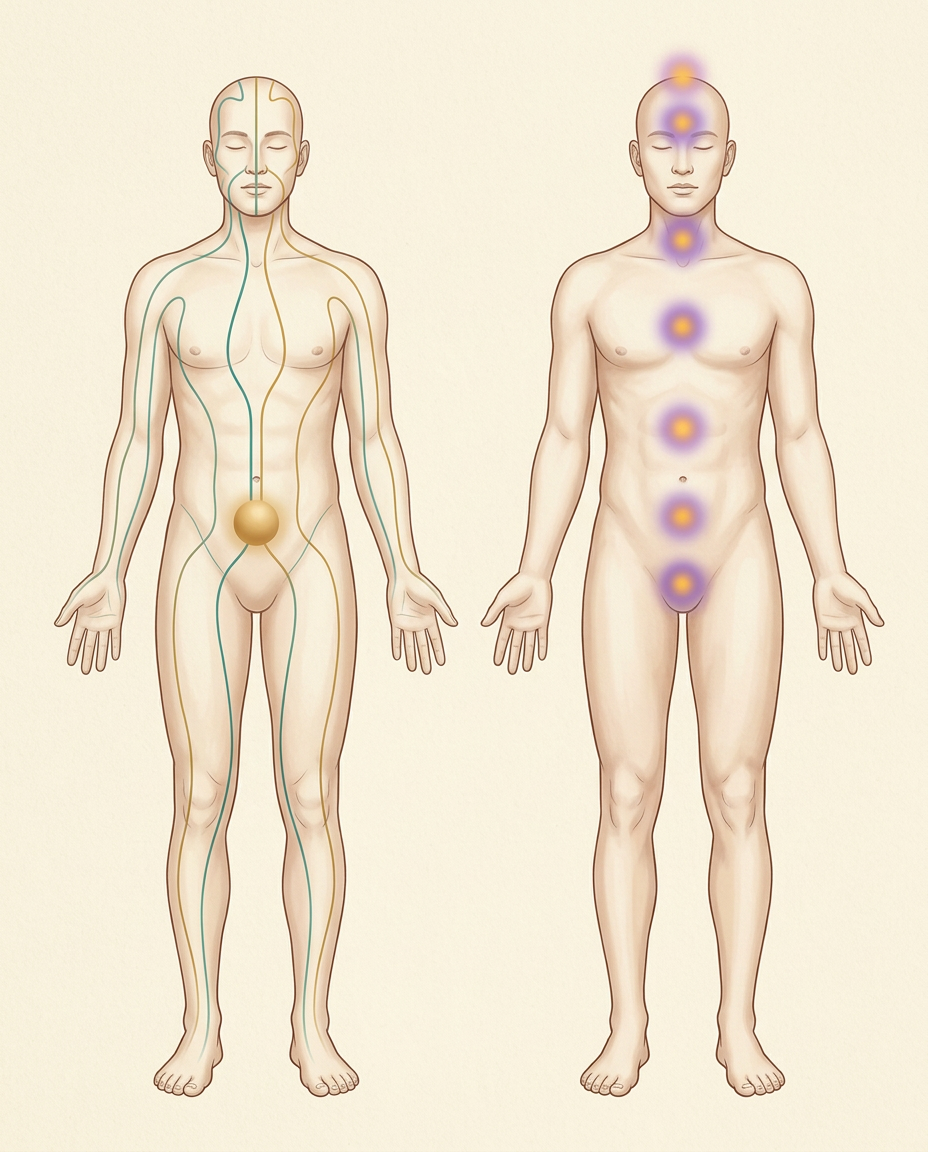
The word dantian is commonly translated as “elixir field.” Qigong schools often discuss three dantian: an upper center associated with attention and insight, a middle center associated with breath and feeling, and a lower center associated with grounding, stability, and the body’s center.
The lower dantian is often described as being below the navel and toward the body’s center. In practice, a student may use that area as an attention anchor while standing, sitting, or moving. The useful question is not whether a scan will reveal a hidden storage tank, but whether the practice helps the student breathe naturally, stand with less tension, and maintain steady attention.
The Five Phases
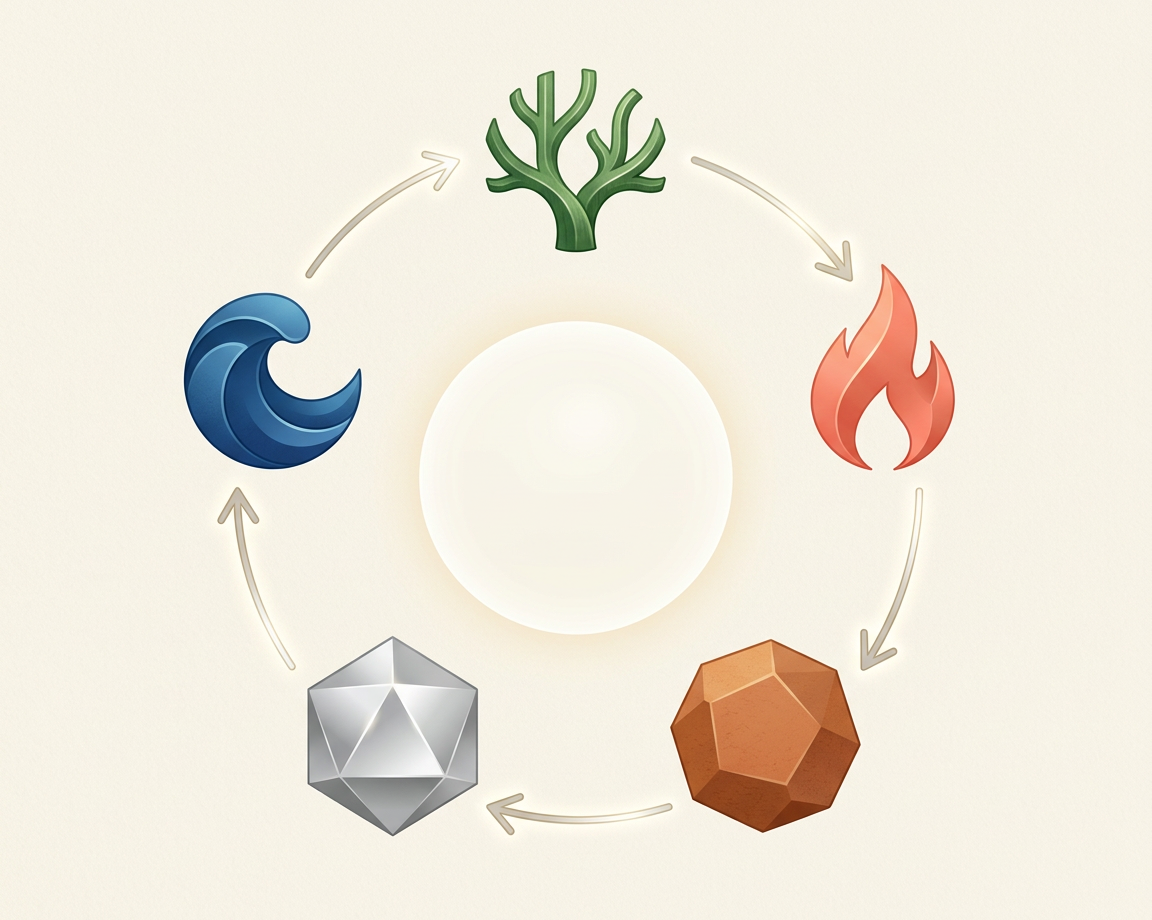
The Five Phases — Wood, Fire, Earth, Metal, and Water — are a traditional correspondence system. They are used to discuss cycles of change, seasons, qualities of movement, emotions, sounds, colors, and relationships between functions. “Phase” is often more accurate than “element,” because the model describes processes and transformations rather than five chemical substances inside the body.
Qigong teachers may use the phases to organize a meditation, a movement sequence, or a reflection on emotional balance. The correspondences are not universal: details vary by classical source, school, and modern teacher.
Extraordinary vessels and the Microcosmic Orbit
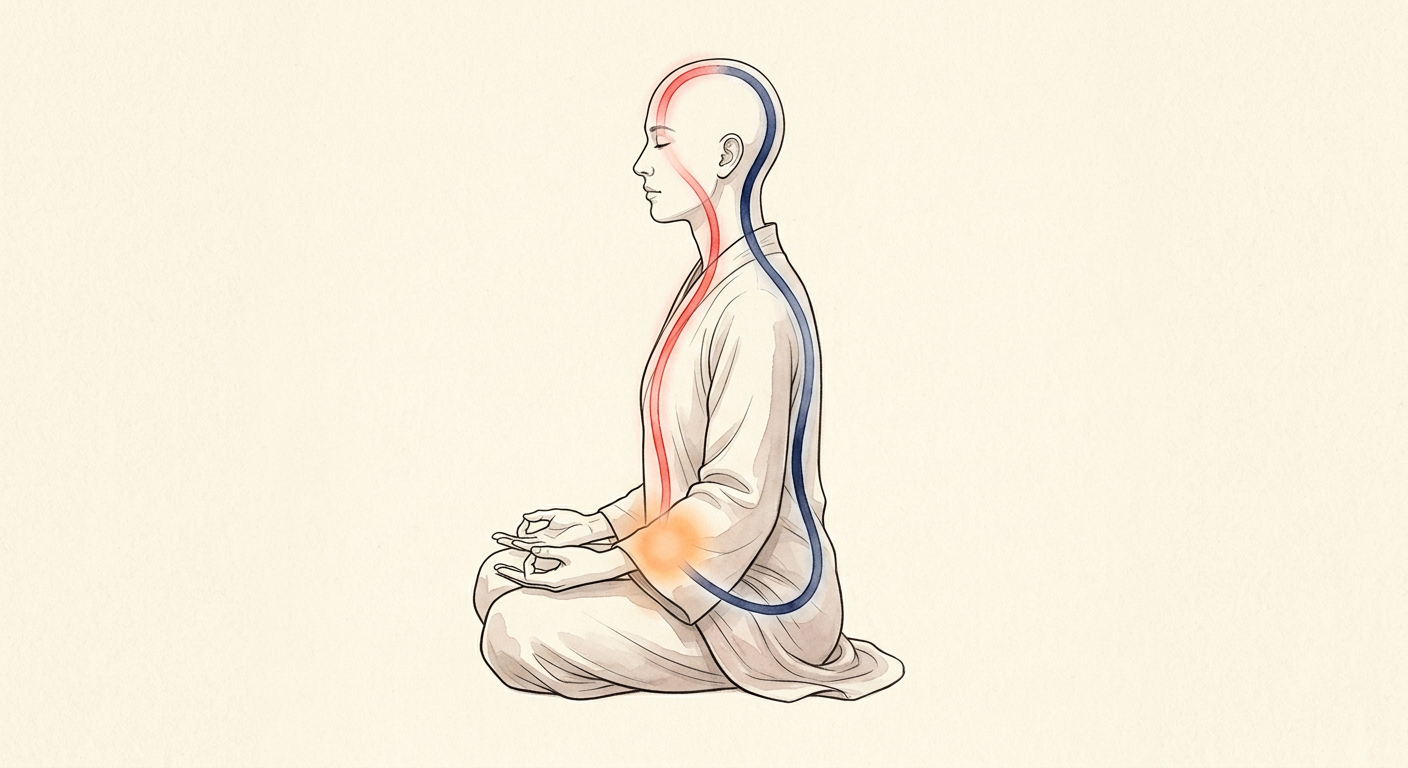
The Eight Extraordinary Vessels are another traditional layer of Chinese medical and internal-practice theory. Two of the best-known are the Du or Governor vessel, associated with the back of the body, and the Ren or Conception vessel, associated with the front.
The Microcosmic Orbit, or Small Heavenly Circuit, is a practice in which attention follows a loop up the back and down the front, often returning to the lower dantian. It is more useful to teach this as a gentle attention-and-breath sequence than as a proven physical circuit. Beginners should not force the route, hold the breath, or try to drive sensations through the head.
Qigong and yoga: related, not identical
Qigong and yoga can both include breath, attention, posture, meditation, and a theory of subtle energy. That shared territory makes comparison useful, but it does not make qi identical to prana, meridians identical to nadis, or dantian identical to chakras. Each tradition has its own history, vocabulary, methods, and internal debates.
What research can and cannot tell us
Research on Qigong and Tai Chi can evaluate measurable outcomes such as balance, mobility, pain, sleep, stress, and quality of life. The National Center for Complementary and Integrative Health describes Qigong as a generally safe practice while also noting that evidence varies by condition and study quality.
Those findings should not be stretched into a claim that modern science has confirmed every traditional statement about qi, meridians, chakras, or energy fields. A responsible explanation can respect a tradition’s language, describe what practitioners do, and remain honest about what has and has not been measured.
How to use this guide with a course
This page is a conceptual map. For guided practice, see the Qigong course collection. A course may use a more specific lineage vocabulary, sequence, or visualization. Begin with posture, natural breathing, and attention before attempting advanced internal practices. When a course uses traditional health language, treat it as a practice framework and continue to use ordinary medical care when needed.
Frequently asked questions
What does esoteric anatomy mean in Qigong?
In this guide, esoteric anatomy means a traditional map used to describe how practitioners experience and train breath, attention, movement, and qi. It is a cultural and practice framework, not a claim that meridians or dantian are organs visible on a conventional anatomical scan.
Are meridians real anatomical structures?
Meridians are real concepts within traditional Chinese medicine and Qigong practice, but modern anatomy has not established them as physical tubes or a separate internal wiring system. Research can study acupuncture, movement, breathing, and outcomes without proving the traditional map as literal anatomy.
What is the lower dantian?
The lower dantian is a traditional practice center located in the lower abdomen, commonly described as below the navel and toward the body’s center. Practitioners use it as an anchor for posture, breathing, grounding, and attention; it is not a separately identifiable organ.
How is Qigong esoteric anatomy different from the chakra system?
Qigong and Chinese traditions commonly discuss qi, meridians, vessels, and dantian, while Indian yoga traditions discuss prana, nadis, chakras, and kundalini. They share themes of breath, attention, and embodied practice, but their histories and maps are not identical.
Is the Microcosmic Orbit a physical circuit?
The Microcosmic Orbit is a traditional internal-practice map in which attention follows a loop up the back and down the front of the body. It should be taught as a breath-and-attention exercise, not as a proven physical circuit or substitute for medical treatment.
Is Qigong safe?
Qigong is generally considered a low-impact activity, but beginners should use natural breathing, avoid forceful breath retention, stop for pain or dizziness, and adapt movements to their ability. People who are pregnant or have a medical condition should discuss modifications with a qualified health professional.
Further reading
- NCCIH: Qigong — What You Need to Know
- NCCIH: Traditional Chinese Medicine — What You Need to Know
- NCCIH: Tai Chi — What You Need to Know
- Classical and modern Qigong teaching sources should be identified by author, edition, and lineage before being used as evidence for biomedical claims.