Qigong for Beginners: A Friendly Guide to Getting Started

After a long day, you may want a calmer way to move but feel unsure where to begin. Qigong can offer a gentle place to start, and you do not need prior experience, special equipment, or a particular level of fitness. A few simple movements can fit into a small space and take only a little time.
You will learn how basic movement, breathing, and mindful attention come together, plus ways to make a first session comfortable. You can move at your own pace and keep each motion small. If a position does not feel right, you can adapt it or pause.
A simple starting point matters more than a perfect performance. The ideas here will help you try a short practice with care, whether you are hoping to ease stress or add a quiet moment to your daily routine. First, it helps to understand what the practice is and what qi means.
Key Takeaways
- You can begin without special equipment, advanced fitness, or prior experience.
- Simple movements, natural breathing, and attention are useful starting points.
- A small, clear space at home is often enough for a first session.
- Start gently, adjust the range of motion, and pause if something feels uncomfortable.
- Regular practice may support relaxation and body awareness, though results vary.
What Is Qigong?
Qigong is a traditional Chinese practice that brings together movement, breathing, and meditation. It is pronounced “chee-gong” and is sometimes written “chi kung.” The practice grew from ancient Chinese traditions, including ideas connected with Chinese medicine and ways of cultivating health.
In traditional Chinese medicine, qi is commonly described as the vital energy associated with life and movement. It offers a traditional way to understand vitality, balance, and how the body feels during daily life. Qi is a traditional concept, not a directly measurable energy pathway in modern anatomy.
Qi belongs to a traditional framework for understanding vitality; it is not an anatomical structure that medical tests can measure.
That distinction lets you respect the tradition without treating qi as a diagnosis. Modern anatomy describes structures and processes such as muscles, nerves, blood flow, and breathing. Those explanations do not map directly onto qi, and the traditional concept should not replace medical advice or an explanation of a health concern.
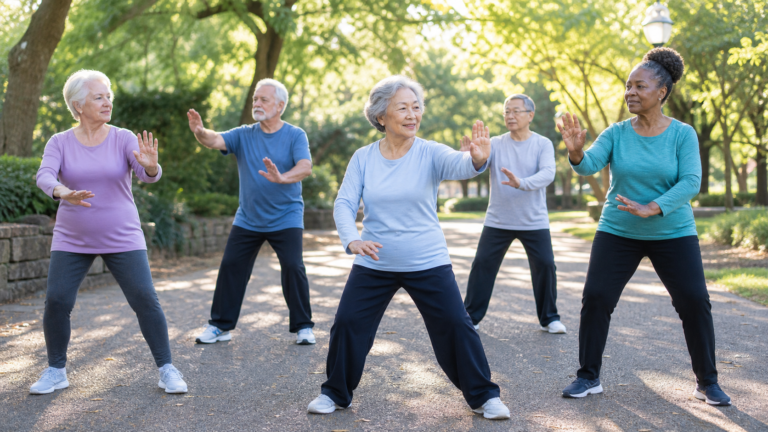
People may use the practice for relaxation, gentle activity, or personal reflection. The word does not name one fixed sequence. A class can include flowing motions, stillness, or both, and its focus may depend on the teacher and tradition.
For a beginner, it is enough to know that the practice coordinates movement, breath, and attention. You can explore those parts without needing to adopt a particular belief about energy. The way they work together forms the practice’s three foundations: body, breath, and mind.
How Do Movement, Breath, and Attention Work Together?
Imagine slowly raising your arms while noticing your breath and the changing sensations in your shoulders. That simple pairing shows how body, breath, and mind can work together without complicated steps. The three foundations of practice are body, breath, and mind.
Movement gives the practice its physical shape
Qigong movements are generally slow, smooth, and intentional. You might shift your weight, raise your hands, or trace a small circle with your arms. The aim is not to make the movement large or impressive. A comfortable range helps you notice how your body moves and where you hold tension.
As you move, pay attention to practical details: your feet on the floor, your shoulders, and the way your balance changes. If a motion feels awkward, make it smaller or pause. You are practicing awareness as well as movement, not trying to match an exact shape at any cost.
Breath creates a steady rhythm
Your breath can remain natural and unforced. Some people coordinate an inhale or exhale with a movement, while others let the breath continue on its own. You can also notice breathing while standing still. There is no single pattern that every beginner needs to follow.
A slow arm lift may happen during an easy inhale, for example, if that timing feels comfortable. If matching breath to movement makes you tense or distracted, let them happen separately. The breath can support a steady rhythm, but it should not become a task that makes you strain.
Attention keeps you present
Focused attention helps you notice what is happening now. You might rest your awareness on your hands, your feet, or the movement of air as you breathe. This kind of attention does not require elaborate visualization or special ideas about energy. Ordinary sensations are enough.
When your mind wanders, gently return to one sensation, such as your feet meeting the ground. That small return is part of the meditation element for many people. Different styles emphasize these foundations in different ways, so a beginner may encounter several kinds of practice.
Which Styles and Approaches Can You Explore?
Start with a practical choice: do you prefer moving through a sequence or practicing mostly in stillness? Both approaches can include breathing and focused attention. A style’s name alone does not tell you how physically demanding a particular class will be.
Active Qigong uses movement, often coordinated with breathing. Passive Qigong involves little or no physical movement and places more emphasis on relaxation, meditation, or breathing. Some practitioners combine active and passive approaches, moving for a while and then settling into stillness.
| Approach | Movement | Attention | Beginner-friendly starting point |
|---|---|---|---|
| Active | Slow arm circles or a short sequence of weight shifts | Notice balance, posture, and movement | Try a short sequence with small, comfortable motions |
| Passive | Little or no movement while standing or sitting | Rest attention on breathing or bodily sensations | Begin with a brief, comfortable period of stillness |
| Integrated | A combination of movement and stillness, not one standardized form | Shift attention between motion and quiet | Try a few simple motions, followed by a short pause |
Active practice moves with the breath
In an active session, you may repeat gentle movements while breathing comfortably. The sequence can be simple, with pauses between motions. The goal is not speed. A slow pace gives you time to notice how each movement feels and adjust its size.
Passive practice emphasizes stillness
A passive session may involve a settled position, relaxed breathing, and meditation. It can suit someone who wants fewer movements or prefers to begin with quiet attention. Stillness does not mean you must hold a rigid pose. You can shift or stop when you need to.
Integrated practice combines movement and stillness
Some teachers blend active and passive elements in one class. For example, you might move through a brief sequence, then stand quietly and notice your breath. This is a combination of approaches, not a separate form with one standard set of movements.
Styles can also differ by their purpose
Medical, martial, and spiritual Qigong describe different aims, not one specific movement format. Named examples include Five Elements, Buddha Palm, and Swimming Dragon. These names can point toward a tradition or approach, but they do not tell you exactly what a class involves.
Ask what movements, pace, and positions a class uses before you join. A class with a familiar name may still vary in length, intensity, and instruction. Different traditions can overlap in their practices, which also helps explain why Qigong and tai chi are sometimes taught together.
How Is This Practice Different From Tai Chi?
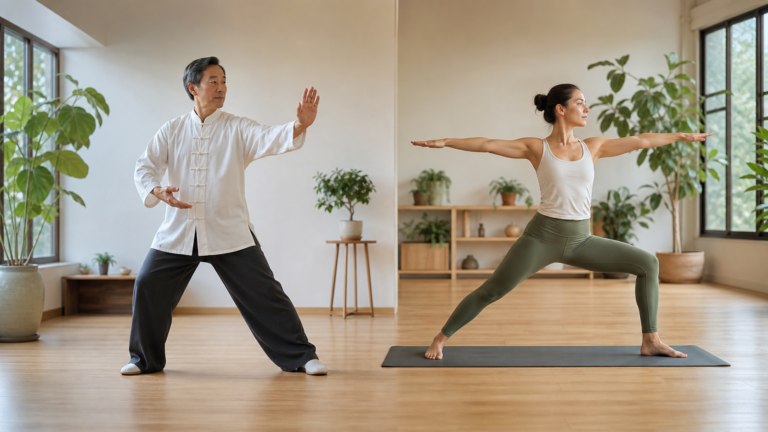
Qigong is a broad family of practices often focused on health, breathing, and mindful movement, while tai chi has roots as a martial art. They share features, including controlled movement and internal awareness, so their boundaries can overlap.
Tai chi often uses connected, controlled sequences, while Qigong includes many different forms and formats. That distinction can help when you are choosing a first class, but it is not a strict dividing line. Teachers may draw from both traditions, and some movements or ideas may appear in each.
| Practice | Common emphasis | Typical movement format | Traditional context |
|---|---|---|---|
| Qigong | Health, breathing, mindful movement, and balancing qi | Varied motions, repeated exercises, stillness, or a mix | A broad family of practices rooted in Chinese traditions |
| Tai chi | Controlled movement, balance, coordination, and internal awareness | Connected sequences that developed from martial forms | A martial art with a history of self-defense and training |
Both practices can invite you to move with care and notice how your body feels. A Qigong class may use a short repeated movement rather than a long sequence. A tai chi class may teach a connected form in which one movement flows into the next.
Those descriptions are common patterns, not rules for every class. Some tai chi sessions focus on health and gentle movement, while some Qigong sessions include more demanding motions. The terms can also be used in overlapping ways, especially when an instructor draws from both.
If you are deciding where to begin, ask what the actual class includes. Find out whether you will learn a sequence, repeat individual movements, practice mostly in stillness, or combine approaches. You can also ask how the instructor adapts the class for beginners and different ability levels.
Choosing a label matters less than finding a class you can follow comfortably. Once you know what the practice looks like, it is easier to consider the outcomes a beginner may reasonably look for through regular practice.
What Benefits Can a Beginner Reasonably Expect?
Some people notice relaxation or greater body awareness quickly, while other changes take consistent practice. Expect variation, not a guaranteed outcome. Research findings differ by practice and study, and no reported benefit applies to every form or every person.
A 2010 meta-analysis reviewed 77 articles on Qigong and reported consistent, significant benefits across areas that included physical functioning, quality of life, psychological symptoms, and immune function. Those broad results are encouraging, but they do not show that every style produces the same effect. Research on Qigong and tai chi also varies in quality and in the forms studied.
Physical benefits include mobility and balance
Slow movements may give you a way to practice flexibility, range of motion, balance, and coordination. You can work within a comfortable range and notice how steady you feel as you shift or raise your arms. This is gentle movement, not a replacement for strength training or care prescribed for a health concern.
Studies have examined areas such as heart health and blood pressure, but these are reported research topics, not guaranteed results. Findings about tai chi should not automatically count as proof for every Qigong form. The movement, teacher, participant group, and study design can all differ.
Mental and emotional benefits may include calm and focus
Relaxed movement and focused attention may support stress management and a calmer state for some people. You may find it easier to notice tension, settle your attention, or take a quiet pause during a busy day. Mental clarity, emotional comfort, and better sleep are areas people report and researchers explore, not outcomes promised to everyone.
If you have ongoing anxiety, sleep problems, or another health concern, use this practice as an activity you may enjoy, not as a substitute for professional care. A comfortable session can be one part of a broader approach to your well-being. The effect may depend on your needs and the way you practice.
Social benefits can come from practicing with others
A class or group can provide company, shared encouragement, and a regular time to practice. You may also learn by watching how an instructor breaks down a movement. Still, group participation is optional. Practicing alone can be a good fit if you prefer privacy or need a flexible schedule.
Look for changes you can observe without setting a strict deadline, such as feeling steadier during a movement or more settled after a session. Your comfort matters as much as any outcome. The way you set up your body and practice can shape that comfort, so posture and space deserve attention.
How Do You Set Up a Comfortable Posture and Space?
A beginner can clear a small area at home rather than finding a special studio. Simple preparation makes it easier to move without worrying about nearby furniture. Set up a stable stance, then aim for relaxed alignment rather than a rigid pose.
Choose a clear, comfortable place to move
You can practice indoors or outdoors, and you do not need special equipment. Choose comfortable clothing that lets your shoulders, hips, and knees move easily. Look for a spot with enough room to move your arms and shift your weight without hitting a wall or table.
- Clear the floor of loose items and anything you might trip over.
- Make sure you have room to move both arms without striking furniture.
- Wear clothing that allows comfortable movement through your shoulders and hips.
- Keep a stable chair nearby if you want support or a place to rest.
Find a grounded standing posture
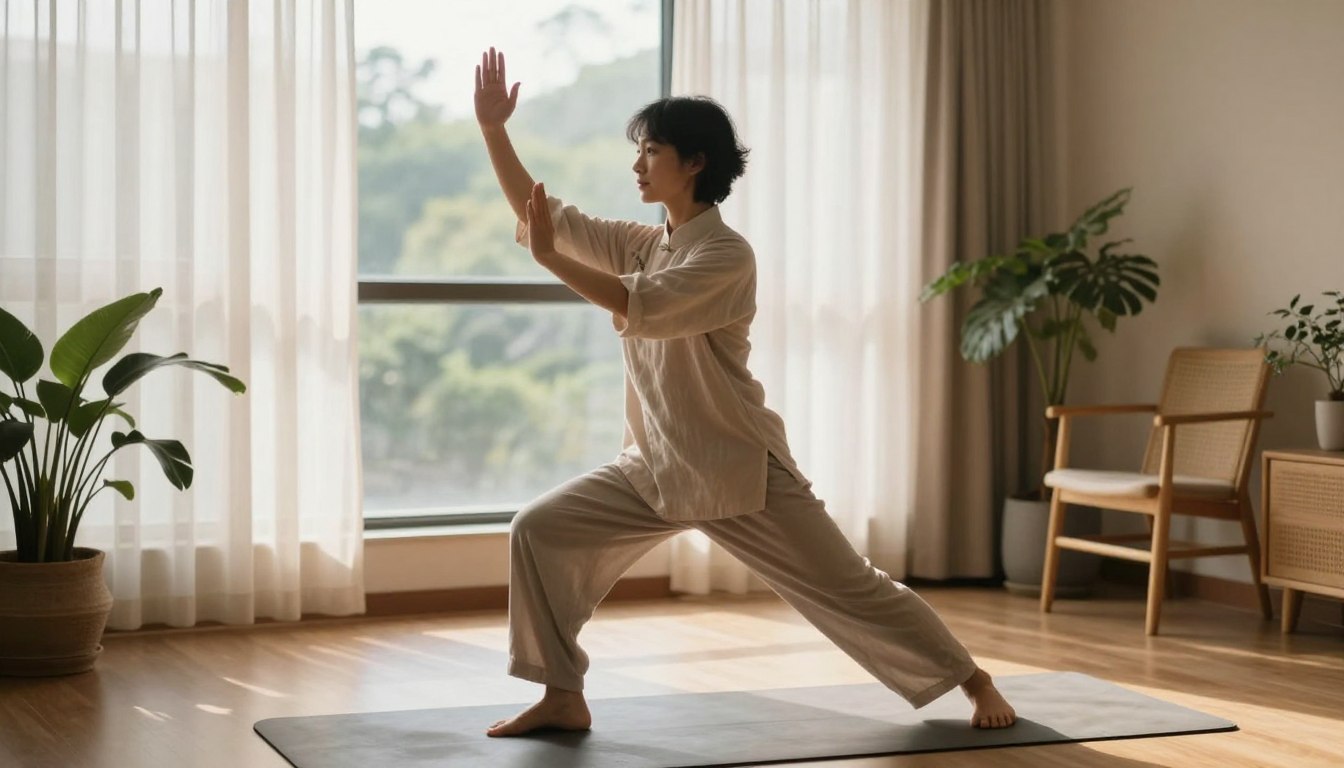
Stand with your feet planted comfortably and your weight distributed evenly. Let your knees relax instead of locking them. Allow your pelvis to settle softly, lengthen your spine, and keep your chest lightly lifted. Draw your chin slightly inward, as if making a small nod.
These details describe a starting point, not a pose you must hold perfectly. Check whether you can breathe comfortably and make a small shift without feeling stiff. If a position feels unstable, change your stance or use a chair for support.
| Position | Starting position | Movement option | Practical consideration |
|---|---|---|---|
| Standing | Feet planted, knees soft, weight even | Small arm lifts or gentle weight shifts | Use a clear, stable floor and keep support nearby if needed |
| Seated | Sit securely with feet supported | Move the arms while keeping the torso comfortable | Choose a chair that does not slide or tip |
| Lying down | Rest in a comfortable, supported position | Use quiet attention or small, easy motions | Make sure the surface feels steady and easy to leave |
Relax unnecessary tension
Notice whether your shoulders are creeping upward or your hands are clenched. Let the arms hang comfortably when they are not moving, and avoid forcing your chest or lower back into position. A relaxed body can still feel supported; “relaxed” does not mean collapsing or ignoring balance.
Seated and lying positions can also be useful, depending on your comfort and needs. No one position is best for every person. Once your space and posture feel comfortable, you can move into a short first routine.
What Does a Simple First Routine Look Like?
A first session can be short, low-pressure, and equipment-free. Keep the movements easy so you can focus on how they feel. Five simple steps are enough to try a beginner Qigong practice at home.
- Check the space and settle into a comfortable posture. Stand with steady feet, or choose a supported position that suits you.
- Loosen your shoulders and arms with gentle movements. Roll your shoulders softly or let your arms swing in a small, relaxed range.
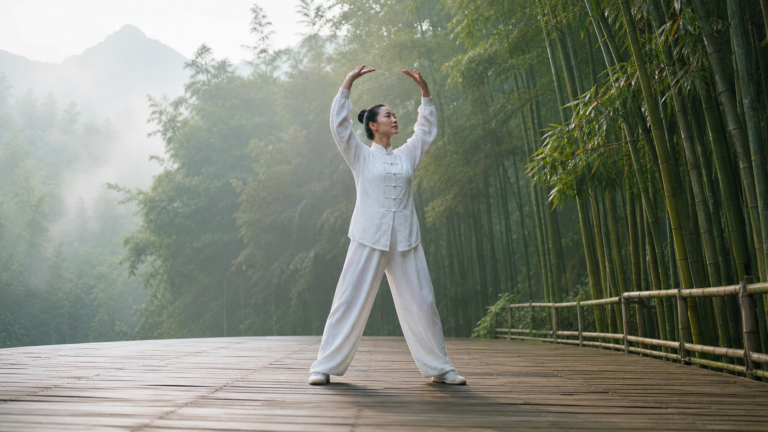
- Try a slow “lifting the sky” movement. Raise your hands in front of you and gradually lift them overhead, only as far as feels comfortable. Lower them gently.
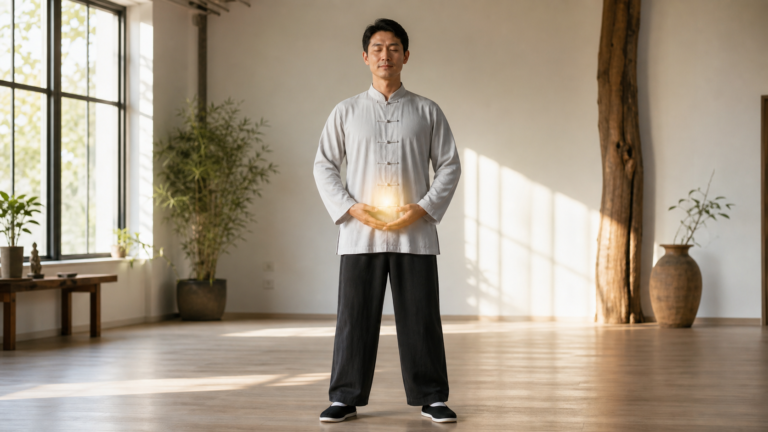
- Try a gentle “holding the ball” movement. Round your arms as if holding a light ball in front of your chest, then let the position soften. Keep the range comfortable.
- Finish with quiet breathing and a brief check-in. Notice how your body feels, without judging whether you performed the movements correctly.
These names describe simple movement examples, not exact shapes that every teacher uses. You can keep your hands lower during “lifting the sky” or make the rounded arm position smaller. If your shoulders feel strained, ease the arms down and rest.
A common beginner mistake is copying a large range of motion before the movement feels comfortable. It can look tempting to lift the arms as high as a teacher does, but your range may differ. Start smaller, then make only a change that still feels easy.
The point is to learn the pace and notice your own response. You do not need to make the movement look polished. If standing does not feel steady, use support or explore another position rather than pushing through discomfort.
This short routine gives you a physical starting point. Once the movements feel familiar, you can add breath and attention without forcing either one.
How Should You Breathe and Focus During Practice?
Let your breathing remain comfortable and unforced as you practice. Natural breathing is enough for a beginner. Do not force deep or prolonged breaths to match a movement.
Notice the inhale and exhale as they happen. You do not need to make each breath larger or slower. Keep your jaw loose and your shoulders relaxed, since tightening those areas can make breathing feel like work.
Some practices coordinate breath with movement, while others use the breath during stillness. If pairing an inhale or exhale with a motion feels easy, you can try it. If the timing feels distracting, let the movement and breathing continue independently.
Breath patterns vary across practices, so there is no one required pattern for every class. A teacher may introduce a particular method, but you can stop if it makes you tense, lightheaded, or uncomfortable. Return to ordinary breathing and take a rest when needed.
For focus, choose one simple anchor. You might notice the breath at your nose or chest, the feeling of your feet on the floor, or the position of your hands. These points of awareness can help keep your mind with the present movement.
Your attention will wander sometimes. When you notice, bring it back gently rather than criticizing yourself. You do not need to picture energy moving through your body or hold a complicated image. Simple mindfulness is enough to begin.
Allow yourself time to become familiar with breathing and attention during practice. A comfortable approach can change as you learn what suits you, leading naturally to the question of how often to practice and when changes may appear.
How Often Should You Practice, and When Might You Notice Changes?
Start with a short, repeatable session of about 10 minutes daily. Consistency matters more than making your first sessions long. Choose a schedule you can return to without turning practice into another source of pressure.
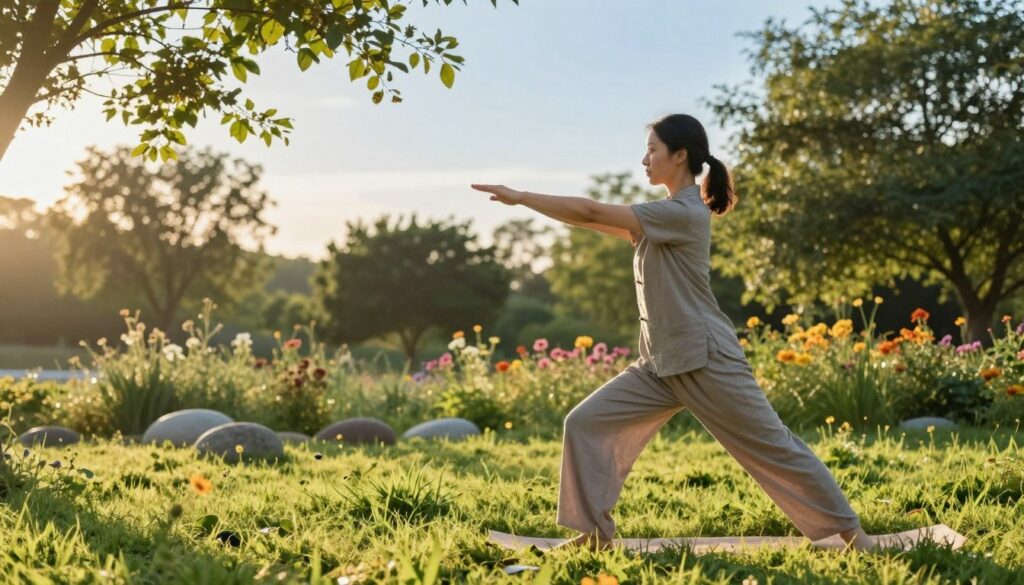
For a beginner, a small daily session can make the movements easier to remember. You might practice at home after waking, during a break, or at another time that already fits your life. If a daily routine does not work, a few short sessions spread through the week are still a practical choice.
- Try about 10 minutes daily for a short, steady habit.
- Spread a few brief sessions across the week if daily practice feels difficult.
- Choose longer sessions of 30 to 60 minutes, three to five times weekly, if that schedule suits you.
Sessions for general health are often 30 to 60 minutes, three to five times per week. That is a common format, not a requirement for beginners. You can begin with less time and add minutes only if the practice remains comfortable and useful to you.
Some people notice relaxation or greater awareness soon after practicing. Other changes may take weeks or months, and timing varies by person and practice. Do not use a fixed deadline to judge whether you are doing well. A calm session today can matter even if other changes come later.
Sleep and other parts of life can also shift for reasons beyond your practice. Notice how you feel without assuming one session caused every change. Practicing qigong is not a test of willpower, and missed days do not erase what you have learned.
Use a schedule that fits your time and energy, then adjust it as needed. Duration and movement can also be adapted to your ability, which makes practical modifications worth considering.
How Can You Adapt Movements to Your Body?
Qigong does not require everyone to stand. You can adapt the position and movement to your needs, energy, and comfort. A smaller range of motion or a supported position can make practice more accessible.
Practice standing with a smaller range
If you feel steady standing, make movements smaller or keep your feet planted instead of shifting your weight. You can also stand near a wall or keep one hand close to a stable counter. That support can help you feel more secure while leaving the other arm free.
There is no need to match the size of another person’s movement. A short lift or slight weight shift still lets you practice. Accessibility depends on the individual, so choose a position that feels stable rather than forced.
Use a chair for seated movement
In a seated version, choose a sturdy chair and let your feet rest on the floor or another stable support. You can move your arms in front of you while keeping the shoulders comfortable. If reaching overhead feels difficult, keep the hands below shoulder height.
Check that the chair does not slide and that you can sit without straining your back. You might move one arm at a time or pause between movements. The goal is a position you can maintain comfortably, not a particular shape.
Choose stillness or lying down when appropriate
Stillness can be an option when movement is tiring, and lying down may suit a person who needs extra rest. You can notice the breath or a simple body sensation without adding a large motion. Choose a steady surface and a position you can leave safely.
| Position | Useful when | Movement adaptation | Support or comfort check |
|---|---|---|---|
| Standing | You feel steady on your feet | Use small arm lifts and avoid large weight shifts | Keep a hand near a stable counter or wall |
| Seated | Standing feels tiring or unsteady | Move the arms while the feet stay supported | Use a sturdy chair that does not slide |
| Lying down | You need rest or prefer stillness | Notice breathing or make a small, easy motion | Choose a supportive surface and a comfortable position |
Age, strength, flexibility, balance, and energy can all affect which option feels right. You may use different positions on different days. Choose the version that feels steady today, then keep safety in mind and seek guidance when you need it.
How Do You Practice Safely?
Gentle movement should still feel comfortable, not painful. Pay attention to your body and stop or adjust when something feels wrong. Qigong is not a substitute for medical care, and it is not risk-free for everyone.
Use a few simple checks to guide a session. They can help you notice when to continue, make a change, or pause. You do not need to push through pain to gain experience or prove that you are practicing correctly.
- Keep movements within a range that feels comfortable and controlled.
- Stop or adjust a movement if pain occurs.
- Rest if fatigue or discomfort builds during practice.
- Consult a healthcare provider before starting if you are pregnant or managing a health condition.
If you are pregnant or living with a health condition, a healthcare provider can help you consider your needs before you start a new movement practice. The advice may depend on your health and the type of movement you plan to try. Do not change prescribed care because you have begun practicing.
People living with emotional trauma, depression, or chronic pain may benefit from beginning slowly and practicing with qualified guidance. Movement and focused attention can feel different from day to day. Notice how you feel during and after a session, and stop if the practice becomes distressing.
For some people, stillness or attention to the breath can also bring up uncomfortable feelings. You can open your eyes, change position, pause, or end the session. A teacher who understands your needs may help you find a pace that feels manageable.
A safe practice can be modest: small movements, short sessions, or quiet attention may be enough for today. Once you know how to adapt and pause, you can think about fitting practice into everyday life.
How Can You Build a Lasting Routine?
Try adding a few minutes of movement after brushing your teeth or before your first morning coffee. Linking practice to an existing cue makes it easier to remember. A realistic routine is one you can return to, not one that has to look impressive.
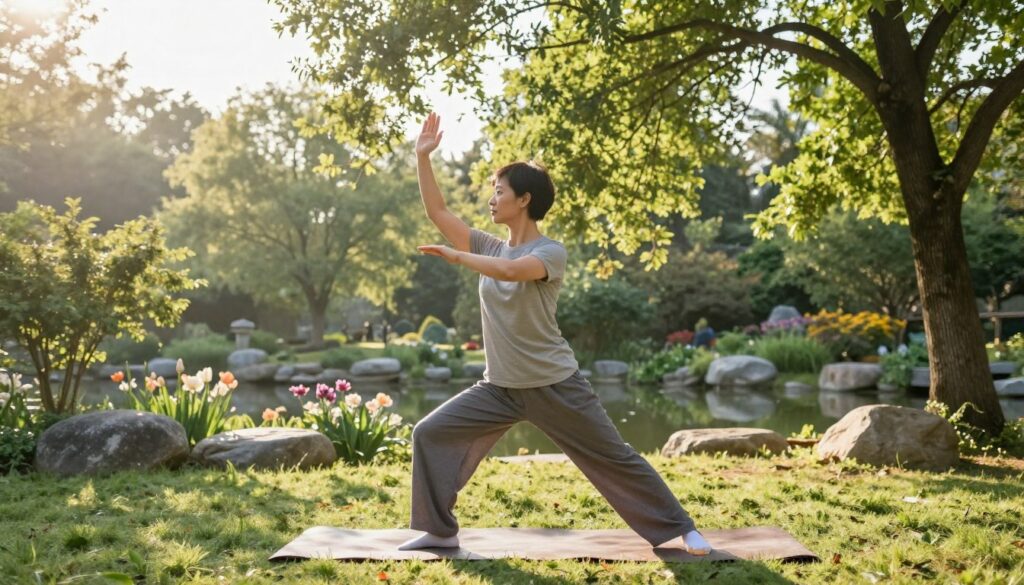
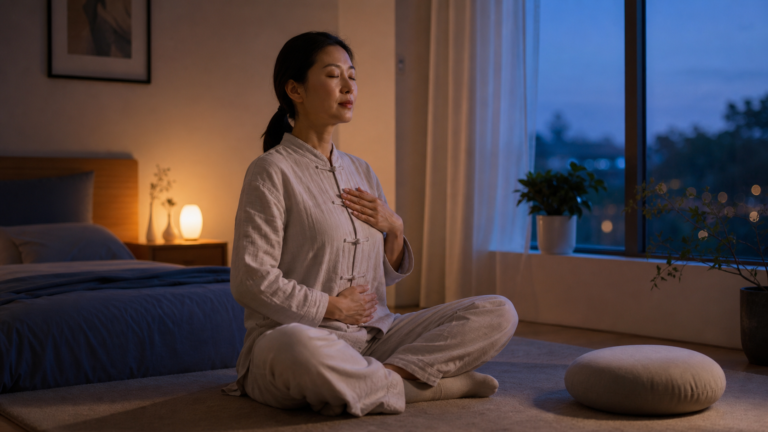
Choose a time already present in your day, such as a morning routine, a work break, or the quiet period before bed. You can put a reminder near the place where you plan to practice. Keep the first goal small enough that a busy day does not make it impossible.
A brief practice can offer a pause for relaxation and mindfulness. You might notice a little more inner peace or emotional balance, though those experiences differ from person to person. Spiritual development may matter to some practitioners, while others simply value a calm stretch in the day.
If you want help learning form, consider a beginner class or a guided online session. A local group can give you a regular time to practice and a chance to ask questions. Watching an instructor demonstrate a movement may make it easier to understand how small or gentle it can be.
Look for a class that explains what you will do and welcomes questions about comfort and adaptations. You can ask whether the session focuses on movement, stillness, or a mix. If you attend a group, notice whether the pace and instruction feel right for you.
A group can offer shared encouragement, but it is not necessary for a consistent practice. Practicing alone is a valid option, especially if you prefer privacy or need to fit sessions around an uneven schedule. You can use a familiar short sequence or follow a trusted guided session.
Keep expectations kind. You may miss a day, change your plan, or choose a seated session instead of standing. That flexibility helps the practice fit real life rather than becoming another rule you feel you have failed to follow.
As you continue, notice which setting and time make it easiest to return. Your practice may stay brief, or you may explore a class when you feel ready. Choose one realistic daily cue or one beginner class to try next.
A modest next step is enough. Take that cue or class as a chance to learn what feels comfortable, then carry that low-pressure approach into your first few sessions.
Conclusion
Your first session does not need to be perfect or long. A small, comfortable practice gives you a useful beginning, and you can adapt the position and pace to your needs.
Clear a small space and try the short routine with natural breathing. Let the movement stay easy, and pause whenever you need to. You can practice standing, seated, or in stillness, depending on what feels steady that day.
There is no need to force a particular feeling or result. One calm session is simply a chance to notice your body and make room for a little movement. Try one comfortable session, then notice how it feels.