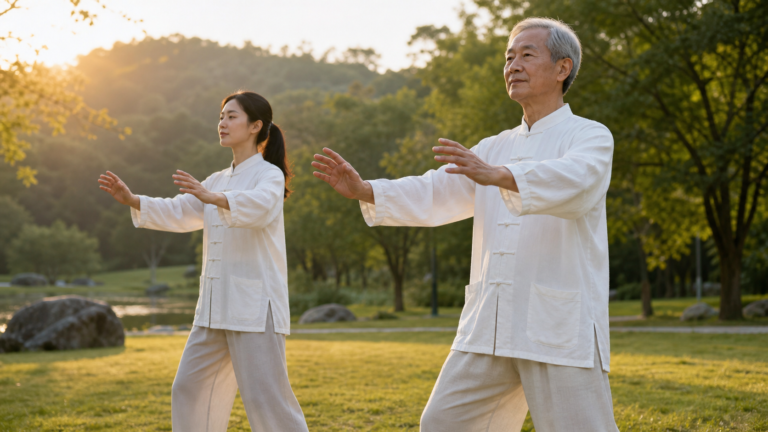
Welcome to Develop Your Energy: What’s Inside and Where to Start


TL;DR: I’m Sifu Dan Ferrera, and Develop Your Energy is my online school. It offers 18 Qigong and Tai Chi courses I teach personally. Most beginners start with Qigong 101, my beginner foundation course ($45). Free guides, research-backed lessons, and personal email support are included. New here? Start Here to find the right course for you, or browse the Qigong & Tai Chi questions answered page.
Expert Insight from Sifu Dan Ferrera (formal lineage instruction in Shaolin One Finger Zen, Niikura Ki breathing, and Kundalini methods. Over 15 years teaching online with 1,600+ course enrollments. Answers student questions personally via email.)
Qigong and Tai Chi instructor based in Michigan, teaching online since 2010. Training daily since 2002 across Chinese, Japanese, Malaysian, Indonesian, Tibetan, and Indian internal systems.
This page is my own guided tour of the platform — written by me, the founder, not an independent review. Below I’ll walk you through what’s inside, who each course is for, and the best place to begin.
What Is Develop Your Energy, and Who Is Behind It?
Develop Your Energy is an online training platform dedicated to Qigong and Tai Chi instruction. It has been operating since 2010, which makes it one of the longer-running independent sites in this space. The platform hosts 18 courses ranging from beginner fundamentals to advanced practices, and it has accumulated over 1,600 course enrollments over the years.
The person behind everything is Sifu Dan Ferrera, a Qigong and Tai Chi instructor based in Michigan. Dan has been training daily since 2002 across a wide range of internal systems: Chinese, Japanese, Malaysian, Indonesian, Tibetan, and Indian. He holds formal lineage instruction in Shaolin One Finger Zen, Niikura Ki breathing, and Kundalini methods. That breadth of training shows up in the diversity of courses offered on the site.
What stands out about this platform is the directness. The site’s tagline is “Learn to feel, build and use your energy,” and the whole design reflects a no-nonsense approach. There are no flashy marketing gimmicks. Courses come with PDFs, exclusive video lessons, and lifetime access. Students get personal email support from Dan himself, which is rare for an online course platform at this price point.
The site also puts a strong emphasis on research. A dedicated research hub provides plain-language summaries of clinical trials on Qigong and Tai Chi, covering conditions like COPD, cancer recovery, chronic back pain, Parkinson’s, blood pressure, and anxiety. Each summary links to the practice it applies to. This combination of traditional teaching methods and modern evidence gives the platform a grounded, trustworthy feel that separates it from the more mystical corners of the Qigong world.
What Is Qigong 101, and Why Does the Site Recommend Starting There?
Qigong 101 is the foundational course on Develop Your Energy, and the site describes it as “the root practice behind every course here.” It costs $45, comes with lifetime access, and includes PDFs plus exclusive video instruction. Every other course on the platform builds on what Qigong 101 teaches.
The course covers three core areas. First, correct standing posture and the breathing method that activates Chi. Second, how to feel energy in your hands within the first week of practice. Third, a sustainable 15-20 minute daily routine. These are the building blocks. Without them, the intermediate and advanced courses would lack context.
Sifu Dan positions this course as assuming zero prior experience. If you have never heard of Qigong or have no idea what Chi is, Qigong 101 starts from the beginning. The site explicitly states, “If you can stand and breathe, you can begin.” That low barrier to entry makes it accessible to people who might feel intimidated by the terminology or the traditions surrounding internal energy work.
The $45 price point is worth noting. In a market where online courses routinely charge hundreds of dollars, this course is a modest investment. You get lifetime access and direct email support from the instructor. There is also a free 10-day standing Qigong guide included, which lets you start practicing immediately while you work through the main course material. The site even offers a comparison article, “Qigong vs Tai Chi: which should you learn first?” for people who are unsure whether Qigong is the right entry point for them. Evidence: A 12-month JAMA trial of 342 adults found that Tai Chi lowered systolic blood pressure more than aerobic exercise. — JAMA (Journal of the American Medical Association)
Who Is Sifu Dan Ferrera, and What Are His Credentials in Niikura Ki Breathing and Shaolin One Finger Zen?
Sifu Dan Ferrera is the sole instructor on Develop Your Energy. He teaches from Michigan and has been training daily since 2002. That is over two decades of personal practice, which is a long runway of experience before you even factor in his teaching career, which started in 2010.
His training spans multiple traditions and countries. The site lists Chinese, Japanese, Malaysian, Indonesian, Tibetan, and Indian internal systems as part of his background. Three specific lineages stand out: Shaolin One Finger Zen, Niikura Ki breathing, and Kundalini methods. Each of these represents a distinct approach to internal energy cultivation.
Niikura Ki breathing is a Japanese energy breathing method. The site includes a dedicated page called “Ki Breathing, Basic Four,” which suggests Dan teaches specific Niikura Ki breathing techniques as part of his curriculum. Shaolin One Finger Zen is a Qigong method from the Shaolin tradition, and formal lineage instruction in this art means Dan received direct transmission from a recognized teacher in that lineage.
What makes Dan’s teaching approach distinctive is his accessibility. He answers student questions personally via email. For a platform with 1,600+ enrolments across 18 courses, this is a significant commitment. The site describes his teaching style as “traditional methods, taught plainly, backed by modern research.” He does not wrap the material in esoteric language or mystical claims. The research hub on the site, with its plain-language summaries of clinical trials, reflects this philosophy. Dan appears to be someone who respects the traditions he trained in while recognizing that modern students want evidence alongside experience.
What Free Resources Does Develop Your Energy Offer Before You Buy Anything?
The site offers three substantial free resources, and they are worth exploring before you spend a dollar. This is one of the platform’s strengths: you get to experience the teaching style and the practices before committing to a paid course.
The first free resource is the 10-Day Standing Qigong Guide. This covers Zhang Zhuang, the classic “standing like a tree” practice. It is laid out one day at a time, so you get a structured progression rather than a single information dump. Zhang Zhuang is one of the most widely practiced forms of Qigong in the world, and having a guided 10-day introduction is a solid way to see whether this type of training resonates with you.
The second free resource is the Inner Smile and Six Healing Sounds guide. These are two Taoist practices focused on calming the organs and the mind. The site provides complete instructions for both. These practices are meditative in nature and complement the more physical standing work from the Zhang Zhuang guide.
The third free resource is the FAQ section, which contains over 40 plain answers to common Qigong questions. Topics include what Chi feels like, how long results take, and what to practice first. This is a genuinely useful resource even if you never buy a course, because it addresses the questions that most beginners have but feel awkward asking.
Taken together, these three free resources give you a real taste of the platform. You get physical practice with Zhang Zhuang, meditative practice with the Inner Smile and Six Healing Sounds, and intellectual grounding through the FAQ. That is a generous amount of free content. Evidence: 40 studies involving 3,800+ participants showed moderate-to-large effects of Qigong and Tai Chi on stress, anxiety, and mood. — Develop Your Energy Research Hub (meta-analysis summary)
What Does the Research Say About Tai Chi and Qigong for Health Conditions?
Develop Your Energy maintains a dedicated research hub that reviews clinical evidence for six specific health conditions. The site provides plain-language summaries of clinical trials, describing what researchers measured, who was involved, and the size of the effect. Each summary links to the practice it applies to.
For blood pressure and heart health, the site highlights a 12-month JAMA trial involving 342 adults. The finding: Tai Chi lowered systolic blood pressure more than aerobic exercise. JAMA is one of the most respected medical journals in the world, so the result is a high-quality data point.
For anxiety and depression, the site references a body of 40 studies covering over 3,800 participants. The result: moderate-to-large effects on stress, anxiety, and mood. This is a substantial evidence base that goes beyond a single study.
For balance, Parkinson’s disease, and brain health, the site cites a New England Journal of Medicine study showing that Tai Chi cut falls by two-thirds compared to stretching in Parkinson’s patients. The NEJM is another top-tier medical journal, and a two-thirds reduction in falls is a clinically meaningful outcome.
The research hub also covers COPD and breathing, cancer recovery, and chronic back pain, though the homepage does not detail specific studies for those conditions. What matters here is the approach. The site does not make vague wellness claims. It points to specific trials, names the journals, and describes the populations studied. This evidence-first approach is unusual in the Qigong teaching world, where marketing often leans on tradition and testimonials alone. Having both traditional teaching and scientific backing gives students a more complete picture.
How Is the Course Library Structured From Beginner to Advanced?
The site organizes its 18 courses into three tiers: Fundamentals, Intermediate, and Advanced. This structure gives students a clear path forward without guesswork.
At the Fundamentals level, the flagship course is Qigong 101. This is where everyone starts. The site also includes a “Start Here” guide that maps your specific goal, whether it is healing, internal power, meditation, or Tai Chi, to the right course. This prevents you from buying something that does not match your needs.
At the intermediate level, courses include Tai Chi Ruler Qigong, Shaolin Chi Kung, and what appears to be a Qigong 202 progression. The site describes these as methods for cultivating and circulating internal energy with real depth. Tai Chi Ruler Qigong is specifically called out as “the bridge” between Qigong and Tai Chi, which makes it a natural next step for anyone who started with Qigong 101 and wants to move toward Tai Chi practice.
At the advanced level, the site lists courses in Inner Power and Empty Force. Empty Force has its own dedicated step-by-step guide, and the site also offers a Distance Energy Healing service, suggesting that the advanced curriculum moves into territory that goes beyond physical health benefits.
The Ki Breathing, Basic Four page indicates that Niikura Ki breathing techniques are part of the curriculum as well, though the site does not specify which tier the course falls into. The overall structure is logical and progressive. You start with the basics, build your foundation, and then choose a direction based on your interests and goals.
What Do Students Say About Their Results From These Courses?
The site features several student testimonials, and they paint a consistent picture of tangible, physical results from regular practice.
One Shaolin Chi Kung student reports, “In 4 weeks practicing the Shaolin Qigong, I’ve had my joint pain and stiffness disappear.” Four weeks is a short timeline for that kind of result, which suggests the practices have a noticeable effect when done consistently.
A Zhang Zhuang student shares: “Digestion, sleep, resilience. I’m doing almost 2 hours a day of standing, and I can feel the difference in everything.” This student clearly went deep into the practice, spending two hours daily on standing meditation. The breadth of reported benefits, digestion, sleep, and overall resilience aligns with what the research literature describes for regular Qigong practice.
A Tai Chi Ruler Qigong student writes, “The information in the manual is very clear and easy to understand, and it’s great to have the video for a visual to clarify details. The practice is both relaxing and great for strength building. This review speaks to the quality of the course materials themselves, not only the practice outcomes.
All three testimonials carry five-star ratings. The site links to a full reviews page for anyone who wants more examples. What strikes me about these testimonials is their specificity. They mention particular conditions improving, specific timeframes, and concrete details about their practice. They do not read like generic praise. They sound like real people describing real changes in their bodies and daily lives. Evidence: A recent NEJM study found Tai Chi cut falls by two-thirds versus stretching in Parkinson’s patients. — New England Journal of Medicine
What Is Zhang Zhuang, and Why Does the Site Offer a Free 10-Day Guide?
Zhang Zhuang, often translated as “standing like a tree,” is a foundational Qigong practice. You stand still in a specific posture and breathe. That is the entire exercise. It sounds simple, and the physical mechanics are simple. The internal experience, however, builds over time in ways most people do not expect.
The site offers a free 10-day guide to Zhang Zhuang, structured one day at a time. This is a smart move for several reasons. First, it gives prospective students a genuine practice experience before they pay anything. You are not watching a promotional video. You are doing the work. Second, Zhang Zhuang is the practice most likely to produce noticeable sensations quickly. The site claims students will feel energy in their hands within the first week of Qigong 101, and standing meditation is the fastest route to that experience.
The student testimonial about Zhang Zhuang mentions improvements in digestion, sleep, and resilience. These are common reported benefits of standing meditation practice. The practice works by training the body to relax while maintaining structure, which has downstream effects on the nervous system, circulation, and breathing patterns.
Offering this guide for free also serves as a filter. If you try Zhang Zhuang for 10 days and feel nothing or hate the experience, you know this platform is not for you. If you feel something—perhaps subtle warmth or tingling in your palms— you have a direct experience that motivates you to go deeper. It is a try-before-you-buy approach that respects the student’s time and money. Most people notice calmer sleep and steadier energy within a month, according to the site.
What Is Niikura Ki Breathing, and How Does It Fit Into the Curriculum?
Niikura Ki breathing is a Japanese energy breathing method, and it is one of the specific lineages Sifu Dan Ferrera holds formal instruction in. The site includes a page titled “Ki Breathing, Basic Four,” which indicates that at least four foundational Niikura Ki breathing techniques are taught as part of the curriculum.
“Ki” is the Japanese term for what the Chinese call “chi” or “qi”: life energy, vital force, and the animating principle behind all living things. Different cultures have different names for it and different methods for working with it. Niikura Ki breathing represents the Japanese approach to energy cultivation through specific breathing patterns.
The inclusion of Niikura Ki breathing alongside Chinese Qigong methods, Shaolin One Finger Zen, and Indian Kundalini practices reflects the breadth of Dan’s training background. He trained across Chinese, Japanese, Malaysian, Indonesian, Tibetan, and Indian systems, and the curriculum draws from all of these traditions.
For students, this cross-tradition approach means you are not locked into a single lineage’s perspective on energy work. The breathing techniques from the Japanese tradition complement the standing practices from the Chinese tradition and the meditative practices from the Taoist tradition. Each approach offers a different doorway into the same fundamental experience: learning to feel, build, and direct internal energy. The “Basic Four” designation suggests these are entry-level Ki breathing techniques, with the possibility of more advanced methods available in higher-tier courses.
How Much Time Do You Need to Practice Each Day?
The site is clear and consistent on this point: 15 to 20 minutes a day is enough to make steady progress. The emphasis is on consistency over session length. Practicing for 15 minutes every day will produce better results than practicing for two hours once a week.
This is a realistic ask. Most people have 15 minutes they waste on their phone each morning. Redirecting that time to standing meditation or breathing practice requires no special equipment, no gym membership, no travel time, and no workout clothes. You stand in your living room, your backyard, or your office, and you practice.
The Qigong 101 course is built around a 15 to 20 minute daily routine designed to be sustainable. The word “sustainable” matters here. Many exercise programs demand an hour a day and then wonder why people quit after three weeks. A 15-minute daily practice is something you keep doing for months and years, which is where the real benefits accumulate.
One student testimonial mentions practicing standing for almost two hours a day, which shows what is possible once the practice becomes part of your life. But that level of commitment is not required to start seeing results. The site states that most people notice calmer sleep and steadier energy within a month of beginning Qigong 101 at the recommended 15 to 20 minutes per day. Start small. Build the habit. The depth comes naturally over time.
What Is the Difference Between Qigong and Tai Chi on This Platform?
The site addresses the issue directly: the platform is mostly Qigong. Tai Chi, as the site explains, is built on Qigong. Qigong is the energy-cultivation practice, and Tai Chi is a martial art that uses those energy-cultivation principles within a movement form.
Think of it this way. Qigong teaches you to feel and build energy. Tai Chi teaches you to move with that energy in specific patterns. You need the first skill before the second one makes sense. This is why the site recommends starting with Qigong 101 regardless of whether your goal is Qigong or Tai Chi.
Tai Chi Ruler Qigong is specifically described as “the bridge between the two.” It sits at the intermediate level and introduces movement patterns that connect standing Qigong practice to Tai Chi forms. For someone who eventually wants to practice Tai Chi, the progression would be Qigong 101 for the foundation, then Tai Chi Ruler Qigong for the bridge, then Tai Chi forms.
The site also offers a dedicated article comparing Qigong and Tai Chi to help people decide which to learn first. The answer, based on how the curriculum is structured, is Qigong first. Always. The energy awareness and breathing skills from Qigong make Tai Chi practice deeper and more effective. Without that foundation, Tai Chi becomes an empty physical exercise, a series of movements without the internal component that gives them meaning.
What Do You Get When You Buy a Course on Develop Your Energy?
Each course purchase includes instant, lifetime online access to lesson PDFs and videos. There is no subscription model, no recurring charges, and no time limit on access. You buy once, and the material is yours forever.
The course format combines written instruction through PDFs with exclusive video content. One student specifically praised this dual format, noting that the manual is clear and easy to understand while the video provides visual clarification of details. This combination addresses different learning styles. Some people learn better by reading, others by watching. You get both.
Every course also includes the ability to email Sifu Dan directly with questions about your practice. This is the detail that elevates the platform above a typical self-paced online course. You are not left alone to figure things out. If you are confused about a posture, unsure whether you are breathing correctly, or wondering if what you are feeling is normal, you send an email and get a personal response from the instructor.
For $45 at the Qigong 101 level, you are getting a complete beginner system, lifetime access, multimedia instruction, and personal support. The value proposition is strong. Many Qigong workshops charge more than that for a single afternoon session with no follow-up support. Here, you get ongoing access to the material and ongoing access to the teacher.
How Does the Start Here Guide Help You Choose the Right Course?
The site organizes its entry points into three doors based on your experience level and goals. This is a thoughtful design choice for a platform with 18 courses, because too many options create paralysis.
Door one is for complete beginners. You start with Qigong 101 and add the free 10-day standing routine. The site promises that most people notice calmer sleep and steadier energy within a month.
Door two is for people with some experience in Qigong or related practices. The recommended courses are Tai Chi Ruler Qigong, Shaolin Chi Kung, or Qigong 202. These focus on cultivating and circulating internal energy with greater depth than the fundamentals.
Door three is for people with a specific goal: healing, internal power, meditation, or Tai Chi. The Start Here guide maps each goal to the right course, which prevents you from buying something mismatched to your intentions.
This structure solves a real problem. Someone searching for Qigong courses online faces an overwhelming number of options with no clear way to evaluate them. The three-door framework gives you immediate clarity. You answer one question about yourself, your experience level, and your goal, and you get a specific recommendation. It respects your time and your wallet. The site explicitly states the guide exists “so you don’t buy the wrong thing,” which is refreshingly honest for a platform that profits from course sales. Evidence: 1,600+ course enrolments across 18 courses, with 15+ years of online teaching since 2010. — Develop Your Energy website
Expert Insight from Sifu Dan Ferrera (formal lineage instruction in Shaolin One Finger Zen, Niikura Ki breathing, and Kundalini methods). Teaching online since 2010 with 1,600+ course enrolments across 18 courses.)
Qigong and Tai Chi instructor based in Michigan. Training daily since 2002 across Chinese, Japanese, Malaysian, Indonesian, Tibetan, and Indian internal systems.
Is Develop Your Energy Worth Your Time and Money?
Develop Your Energy fills a specific gap in the online Qigong and Tai Chi space. It offers structured, progressive training from a single instructor with documented lineage credentials, at price points that are accessible to most people. The platform has been running since 2010, has accumulated over 1,600 enrollments, and covers everything from absolute beginner material to advanced practices like Empty Force and Inner Power. Sifu Dan Ferrera’s cross-tradition background in Shaolin One Finger Zen, Niikura Ki breathing, and Kundalini methods gives the curriculum a breadth you will not find on most single-instructor platforms. His willingness to answer student emails personally adds a mentorship dimension that self-paced online courses typically lack. The research hub is a standout feature. Citing JAMA and NEJM studies, with plain-language summaries of what was measured and how big the effects were, brings credibility to a field often plagued by vague wellness claims. The free resources, the 10-day Zhang Zhuang guide, the Inner Smile and Six Healing Sounds instructions, and the 40+ question FAQ give you ample opportunity to test the teaching style before spending anything. The 15 to 20 minute daily practice requirement is realistic and sustainable. The three-door entry system prevents decision paralysis. The $45 entry point for Qigong 101 with lifetime access removes most financial barriers. If you are looking for a grounded, evidence-aware, traditionally rooted online Qigong education, this platform deserves serious consideration.
Key Takeaways
- Start with the free 10-day Zhang Zhuang standing guide to experience the teaching style before buying anything.
- Qigong 101 at $45 with lifetime access and personal email support from Sifu Dan is the recommended entry point for beginners.
- The platform is research-backed, citing JAMA and NEJM clinical trials on Tai Chi and Qigong health benefits.
- Sifu Dan Ferrera holds formal lineage instruction in Shaolin One Finger Zen, Niikura Ki breathing, and Kundalini methods, spanning over 20 years of daily practice.
- 15 to 20 minutes of daily practice is enough to see results within the first month, according to the site and student testimonials.