
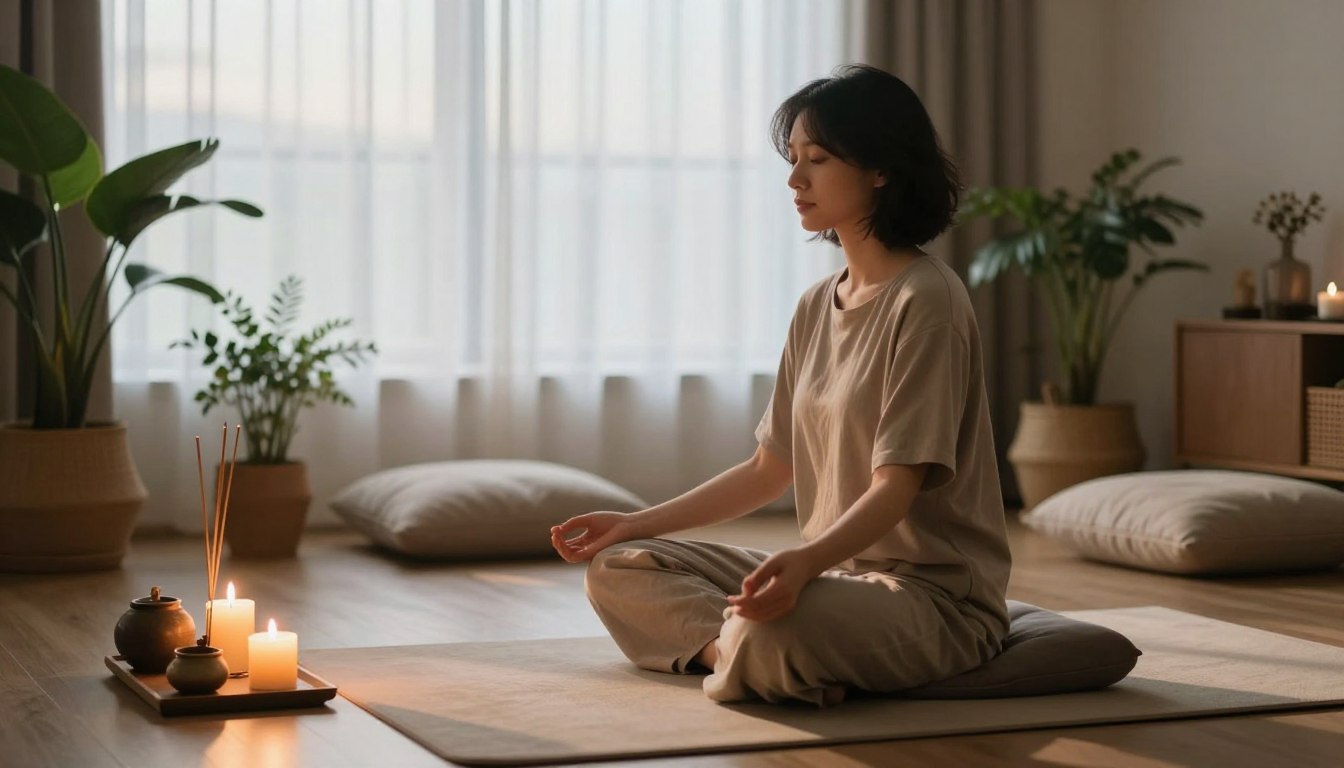
Kundalini Awakening: A Friendly Guide to Getting Started

If you are curious about kundalini awakening, a calm, gradual approach is a better starting point than chasing a dramatic experience. Accounts range from subtle shifts in perspective to experiences that feel intense, and no single story describes everyone.
You may be trying to make sense of something unfamiliar, or simply wondering how a spiritual practice might fit into your life. Either way, curiosity can coexist with care. This guide offers context and practical ways to explore without promising a particular outcome.
Take your time with new practices. Notice how they affect your attention, mood, and ordinary day, and leave room to pause if something feels wrong. Treat the ideas here as context for reflection, not as a diagnosis or a guarantee about what you will experience.
Key Takeaways
- Yoga traditions describe kundalini as spiritual energy, not measured anatomy.
- People report varied experiences, but no single pattern defines an awakening.
- A gentle class can offer a low-pressure place to begin.
- Practice does not guarantee a dramatic event or a set timeline.
- Severe changes in speech, eating, sleep, movement, or perception need medical attention.
- Everyday wellbeing matters more than chasing an intense experience.
What Is a Kundalini Awakening?
In yoga traditions, kundalini refers to dormant spiritual power believed to rest near the base of the spine. Kundalini energy is described as a life force that can rise through the body, though this account belongs to spiritual teaching, not established anatomy.
The subtle body is the nonphysical model of energy, channels, and centers used in some yoga traditions. A 2022 study describes kundalini as dormant vital power rising along the spinal column, while noting that it has never been directly measured.
The tradition describes spiritual power, not a physical current that medical tools have measured.
Kundalini in yoga traditions
In Hindu and tantric yoga traditions, kundalini is understood as dormant spiritual energy associated with the base of the spine. The traditional account describes it rising through seven chakras, or energy centers, toward spiritual awareness.
Different people may interpret the language in different ways. Some take the imagery as a guide for inner experience; others hold it as a symbolic teaching. Neither interpretation changes the distinction between a spiritual belief and a physical process that can be measured.
The subtle-body map of chakras and channels
The subtle body gives practitioners a way to talk about channels and centers that are not visible structures in medical anatomy. The seven-chakra map is part of that model, not a claim that seven physical organs sit along the spine.
For a beginner, the map can provide cultural and spiritual context without requiring you to accept every claim literally. Keep the distinction clear: the traditional map can shape a person’s spiritual interpretation, but it is not a direct measurement of energy in the body.
What experiences might arise during meditation?
People’s accounts can range from a change in mood to movement or unusual sensations, and no single pattern defines an awakening. Reported experiences are personal descriptions, not a checklist that can confirm kundalini awakening.
In a 2022 exploratory study of 80 meditators at two Ananda Marga retreats, positive mood shifts were most commonly reported, followed by motor and sensory experiences. The plain-language descriptions in the table explain those categories; they are not specific examples from the study.
| Reported experience category | Relative order in the study | Plain-language description |
|---|---|---|
| Positive mood shifts | Most commonly reported | A reported change toward a more positive mood |
| Motor experiences | Second most commonly reported | A reported experience involving movement |
| Sensory experiences | Third most commonly reported | A reported experience involving the senses |
Mood and emotional shifts
Some people experience emotional changes during meditation, including a more positive mood. The study also found that greater Tantric Yoga meditation practice was associated with greater positive affect, less negative affect, and greater mindfulness.
That association does not show that meditation caused spontaneous experiences. The study found no relationship between the frequency of spontaneous experiences and either meditation practice amount or trait mindfulness and affect measures.
Movement and sensory experiences
Motor and sensory experiences appeared after positive mood shifts in the study’s reported order. These categories describe types of experience, not signs that prove a spiritual event is taking place.
Lists of signs kundalini awakening can sound certain, but experiences vary and need personal context. Use any label lightly, since the study did not find that spontaneous experiences tracked with time spent meditating.
How can you start with a gentle Kundalini Yoga class?
A beginner-friendly Kundalini Yoga class has a recognizable structure, so you can ask what to expect before you join. An introductory class lets you explore yoga and meditation without treating intensity as a measure of progress.
A typical class moves through five stages, with the main kriya usually lasting 15 to 45 minutes. A kriya is a set of practices, which may include movement, pranayama, or meditation.
Expect the class to follow a sequence like this:
- Opening mantra
- Warm-up
- Main kriya
- Relaxation
- Meditation
Ask the teacher about modifications before class, especially if a movement or breathing exercise is unfamiliar. You can choose an introductory session and let the teacher know you are new, rather than trying to reproduce an intense practice alone.
Different teachers may use different kriyas, but the basic stages help you understand the flow. Spiritual practices should leave room for your own pace, not pressure you to match another person’s effort. Start by attending one class at a pace that lets you remain comfortable and attentive.
How do you prepare without trying to force an awakening?
Preparation is about building a sustainable relationship with practice, not setting a deadline for an awakening. Steady preparation may include yoga, meditation, pranayama, dance, prayer, or attention to the five senses.
Traditional paths may involve years of preparation, but neither time nor a particular routine guarantees an awakening. Sadhana means regular spiritual practice; some people follow it for years, while experiences can also arise spontaneously.

A simple plan can keep practice grounded:
- Choose a manageable practice that fits your current routine.
- Decide what you hope to learn, such as steadier attention or a familiar meditation habit.
- Keep expectations flexible, since experiences do not follow a schedule.
- Make room for ordinary responsibilities and rest.
You do not need to fill every day with spiritual practices to prepare your body or mind. A brief routine that fits around work, relationships, and sleep can be easier to sustain than an ambitious plan that crowds them out.
Keep notes about whether a practice fits your life, rather than trying to predict what it will produce. Let consistency matter more than intensity, and do not measure progress by whether a dramatic event occurs.
Which symptoms need medical attention?
A spiritual interpretation should never delay care when someone cannot speak or eat normally, has severe stiffness, or is hearing commands. Medical evaluation matters when changes disrupt basic activities or perception.
Severe changes in speech, eating, sleep, movement, or perception need professional evaluation, whatever meaning a person gives them. A red flag is not proof of a spiritual cause or a specific diagnosis.
Seek prompt assessment for changes such as:
- Inability to speak
- Difficulty eating or drinking
- Severe stiffness or prolonged abnormal postures
- Command hallucinations
- Major sleep disruption
Experiences that should not be self-diagnosed
Anxiety or other distress can have many causes, and a spiritual label cannot identify them. Share what is happening in plain terms with a medical professional, including when it began and how it affects daily life.
Descriptions such as “energy moving” may express a person’s own interpretation. Clinicians need the observable details too, such as changes in speech, eating, sleep, movement, and awareness.
What a serious case report illustrates
A 2022 case report described a 19-year-old who practiced Hatha Yoga and kundalini asanas on her own for three months. She developed mutism, poor oral intake, body stiffness, and prolonged abnormal postures.
She also had auditory command hallucinations, disturbed sleep, and beliefs that people around her were talking about her. She was diagnosed with schizophrenia, catatonic subtype. Her score fell from 13 to zero on the Bush-Francis Catatonia Rating Scale after treatment with lorazepam and risperidone.
At discharge, she was taking 8 mg of risperidone per day, and the report said she subsequently maintained well with regular follow-up. One case cannot show that yoga caused the diagnosis or predict what will happen to others. If you or someone with you has these severe changes, seek prompt medical help and describe the symptoms plainly.
How can you practice more safely?
Intense breathing is optional, and a beginner should not treat Breath of Fire as a test of commitment. This rapid breathing technique uses an active exhale and passive inhale, and it is typically practiced for 1 to 3 minutes.
Breath of Fire is not a required beginner exercise, and some health situations call for avoiding it or getting direct guidance. The table distinguishes its cautions from advice about intense pranayama or kriya practices.
| Situation | Breath of Fire guidance | Before intense pranayama or kriya |
|---|---|---|
| Pregnancy | Not recommended without direct guidance from an experienced teacher | Consult both a doctor and a teacher |
| High blood pressure or cardiovascular condition | High blood pressure calls for direct guidance; cardiovascular conditions call for consultation | Consult both a doctor and a teacher |
| Epilepsy or glaucoma | Not recommended without direct guidance from an experienced teacher | Consult both a doctor and a teacher |
| Recent abdominal surgery | Not recommended without direct guidance from an experienced teacher | Seek guidance before intense practice |
| Diagnosed psychiatric condition, panic history, or dissociation | A history of panic calls for direct guidance; other conditions need consultation | Consult both a doctor and a teacher |
When to get guidance before intense practice
Pregnant people and people with cardiovascular conditions, epilepsy, glaucoma, a diagnosed psychiatric condition, a history of panic attacks, or dissociation should consult both a doctor and a teacher before intense practices.
For Breath of Fire, direct guidance from an experienced teacher is advised for people with high blood pressure, epilepsy, glaucoma, recent abdominal surgery, or a history of panic attacks. Pregnancy is also a reason not to practice it without direct guidance.
Grounding and easing off
If a practice feels overwhelming, reduce its intensity or pause. Gentle walks, gardening, and ordinary tasks can help you return attention to familiar activities, but they do not replace medical care.
Choose a quieter pace instead of trying to push through distress. Before trying an intense kriya or pranayama practice, check the specific cautions with both a doctor and an experienced teacher when relevant.
What if you never have a dramatic awakening?
A practice can be worthwhile even if nothing unusual happens. A quiet 15-minute meditation may bring peace or greater attention without proving that kundalini has awakened.
A quiet meditation can matter without proving that an awakening has occurred.
The Yoga Sutras describe samadhi as a yogic aim, not a required result of every practice. A beginner does not need to reach samadhi to value meditation or notice gradual changes in awareness.
Some people find that a steady routine helps them meet ordinary activities with more attention. Judge a routine by whether it supports steadier attention and everyday wellbeing, not by whether it produces a spectacle.
Conclusion
A careful start leaves room for curiosity without asking you to chase a particular experience. A gentle, sustainable practice can make space for awareness and reflection, while spiritual interpretations do not replace medical care for serious symptoms.
Choose an introductory class or a gentle practice that fits your week. Afterward, note how it sits alongside your ordinary day, including your energy for work, rest, and the people around you.
You do not have to decide what every sensation means before you begin. Choose one gentle practice for this week, then decide whether it supports the kind of awareness you want in daily life.