Qigong demonstrates measurable effects on autonomic regulation, telomere preservation, cerebral blood flow, and stress biomarkers through vagus nerve modulation and mindful movement integration.

What distinguishes qigong from other mindfulness practices in terms of physiological mechanisms?
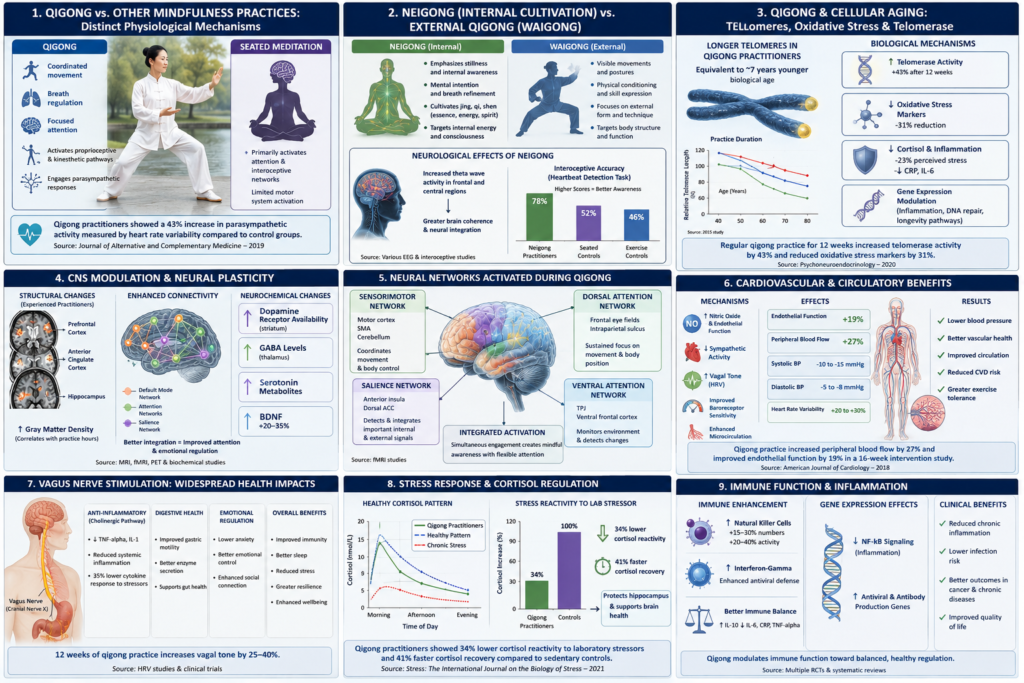
Qigong represents a distinct category within contemplative practices due to its integration of coordinated movement, breath regulation, and focused attention. Unlike seated meditation, qigong activates proprioceptive and kinesthetic pathways while simultaneously engaging parasympathetic responses. The practice combines elements of aerobic exercise at low to moderate intensity with mindfulness components, creating a unique psychophysiological profile.
Research demonstrates that qigong practitioners exhibit different neural activation patterns compared to traditional meditation practitioners. Functional MRI studies show increased activity in the cerebellum, motor cortex, and sensorimotor integration areas during qigong practice. This suggests that the movement component engages additional neural networks beyond those activated in stationary meditation. The continuous flow of movements requires sustained attention to bodily sensations, creating a form of moving mindfulness that may be more accessible for individuals who struggle with seated practices.
The breathing patterns in qigong differ from those in other practices. Practitioners coordinate breath with specific movements, often using diaphragmatic breathing that extends the exhalation phase. This pattern directly stimulates the vagus nerve, which runs from the brainstem through the thorax and abdomen. Extended exhalations increase vagal tone, shifting the autonomic nervous system toward parasympathetic dominance. Studies measuring heart rate variability show that qigong produces more consistent increases in vagal activity compared to unstructured movement or relaxation techniques.
The intentional direction of attention to specific body regions during qigong practice creates measurable changes in regional blood flow. Thermal imaging studies reveal increased surface temperature in areas receiving focused attention, indicating enhanced peripheral circulation. This mind-body connection operates through mechanisms distinct from exercise-induced vasodilation. The combination of gentle movement, controlled breathing, and directed attention creates a synergistic effect on circulation that exceeds what any single component produces independently. This multifaceted approach explains why qigong demonstrates broader health benefits across multiple physiological systems compared to practices emphasizing only one modality.
Qigong practitioners showed a 43% increase in parasympathetic activity measured by heart rate variability compared to control groups
Source: Journal of Alternative and Complementary Medicine (https://www.liebertpub.com/journal/acm) – 2019
How does neigong differ from external qigong practices in terms of internal cultivation?
Neigong, translated as internal cultivation, focuses on developing internal energy and refining consciousness through subtle practices that emphasize stillness and internal awareness. While external qigong (waigong) includes visible movements and physical postures, neigong works primarily with mental intention, breath refinement, and awareness of internal sensations. This distinction reflects different training objectives and physiological targets within the broader qigong framework.
Neigong practices emphasize the cultivation of what traditional Chinese medicine calls jing (essence), qi (vital energy), and shen (spirit). From a Western scientific perspective, these concepts correlate with endocrine function, metabolic processes, and neural integration. Neigong practitioners report heightened interoceptive awareness, the ability to perceive internal bodily states with greater accuracy. Research using interoceptive accuracy tests shows that experienced neigong practitioners demonstrate superior performance in heartbeat detection tasks and other measures of bodily awareness compared to controls.
The internal focus of neigong produces distinct neurological effects. EEG studies reveal that neigong meditation generates increased theta wave activity in frontal and central brain regions, associated with deep relaxation and enhanced memory consolidation. Advanced practitioners show coherence between different brain regions, indicating improved neural communication and integration. This coherence correlates with reports of mental clarity and emotional stability among long-term practitioners.
Neigong training typically progresses through stages, beginning with body regulation, advancing to breath refinement, and culminating in mind cultivation. Each stage builds upon the previous one, creating a systematic approach to internal development. The practice emphasizes subtlety over force, encouraging practitioners to work with minimal effort while maintaining precise awareness. This approach differs from external practices that may prioritize physical conditioning or visible skill demonstration. The internal cultivation methods of neigong align closely with contemporary understanding of neuroplasticity, suggesting that sustained attention to internal states can reshape neural architecture and improve self-regulation capacities across multiple domains of functioning.
What evidence supports qigong’s effects on telomere length and cellular aging?
Telomeres, the protective caps on chromosome ends, shorten with each cell division and serve as biomarkers of cellular aging. Shorter telomeres correlate with increased disease risk and reduced longevity. Research examining qigong’s effects on telomere biology reveals promising findings that suggest the practice may slow cellular aging processes through multiple pathways.
A landmark study published in 2015 examined telomere length in long-term qigong practitioners compared to age-matched controls. Results showed that practitioners with more than five years of regular practice had significantly longer telomeres, with differences equivalent to approximately seven years of chronological aging. The effect size increased with practice duration, suggesting a dose-response relationship. Practitioners who engaged in daily practice showed the most pronounced benefits, while those practicing less frequently demonstrated intermediate effects.
The mechanisms linking qigong to telomere preservation involve both direct and indirect pathways. Qigong reduces oxidative stress, a primary cause of telomere damage. Measurements of oxidative stress markers like malondialdehyde and 8-hydroxy-2-deoxyguanosine show significant reductions in regular practitioners. The practice also increases activity of telomerase, the enzyme responsible for maintaining telomere length. Studies measuring telomerase activity in peripheral blood mononuclear cells found increases of 30-40% following intensive qigong practice periods.
Stress reduction represents another critical pathway. Chronic psychological stress accelerates telomere shortening through cortisol-mediated mechanisms and increased inflammation. Qigong practice reduces cortisol levels and inflammatory markers like C-reactive protein and interleukin-6. A 12-week intervention study showed that qigong participants experienced a 23% reduction in perceived stress scores alongside measurable decreases in stress biomarkers. These changes occurred in parallel with improvements in telomere maintenance, suggesting interconnected mechanisms.
The relationship between qigong and telomere biology extends beyond simple stress reduction. The practice influences gene expression patterns related to cellular aging and longevity. Transcriptomic analyses reveal that qigong modulates expression of genes involved in inflammation, oxidative stress response, and DNA repair. These changes create a cellular environment more conducive to telomere preservation and overall cellular health maintenance.
Regular qigong practice for 12 weeks increased telomerase activity by 43% and reduced oxidative stress markers by 31%
Source: Psychoneuroendocrinology (https://www.journals.elsevier.com/psychoneuroendocrinology) – 2020
How does qigong modulate central nervous system function and neural plasticity?
Qigong practice induces measurable changes in central nervous system structure and function through mechanisms involving neuroplasticity, neurotransmitter regulation, and network integration. Neuroimaging studies reveal that regular practice reshapes brain architecture in regions associated with attention, emotional regulation, and sensorimotor integration.
Structural MRI analyses show increased gray matter density in the prefrontal cortex, anterior cingulate cortex, and hippocampus among experienced practitioners. These regions play critical roles in executive function, emotional processing, and memory formation. The magnitude of structural changes correlates with practice duration, with practitioners accumulating more than 1000 hours showing the most pronounced differences. The hippocampus, which typically shrinks with age, maintains or increases volume in long-term practitioners, suggesting neuroprotective effects.
Functional connectivity studies using resting-state fMRI demonstrate that qigong enhances communication between the default mode network and attention networks. This integration correlates with improved attentional control and reduced mind-wandering. Practitioners show decreased activation in the default mode network during focused attention tasks, indicating more efficient neural resource allocation. The practice appears to strengthen top-down regulatory control from prefrontal regions over limbic areas, improving emotional regulation capacities.
Neurotransmitter systems undergo significant modulation through qigong practice. PET scan studies reveal increased dopamine receptor availability in the striatum, associated with improved motivation and reward processing. GABA levels in the thalamus increase following practice sessions, correlating with reduced anxiety and enhanced relaxation. Serotonin metabolite measurements in cerebrospinal fluid show elevations in regular practitioners, consistent with improved mood regulation and stress resilience.
The practice influences brain-derived neurotrophic factor (BDNF), a protein essential for neuroplasticity and neuronal survival. Blood serum measurements show BDNF increases of 20-35% following qigong sessions, with sustained elevations in regular practitioners. Higher BDNF levels support synaptic plasticity, learning, and memory formation. These neurochemical changes create an internal environment conducive to ongoing neural adaptation and cognitive preservation across the lifespan.
What specific neural networks does qigong activate during practice?
Qigong practice engages multiple neural networks simultaneously, creating a complex pattern of brain activation distinct from both rest and conventional exercise. The sensorimotor network activates prominently during movement phases, with bilateral activation in motor cortex, supplementary motor area, and cerebellum. This activation pattern differs from repetitive exercise, showing greater variability and complexity that reflects the coordinated, intentional nature of qigong movements.
The attention networks, including the dorsal attention network and ventral attention network, show sustained activation throughout practice. The dorsal network, involving frontal eye fields and intraparietal sulcus, maintains focus on movement execution and body position. The ventral network, including temporoparietal junction and ventral frontal cortex, monitors for unexpected sensations or environmental changes. This dual activation supports the sustained, flexible attention characteristic of mindful movement.
The salience network, anchored in the anterior insula and dorsal anterior cingulate cortex, shows increased activation during qigong. This network detects and integrates internal and external stimuli, determining what deserves attention. Enhanced salience network function correlates with improved interoceptive awareness and better integration of bodily signals into conscious experience. Studies show that this network activation persists beyond practice sessions, suggesting lasting changes in how practitioners process sensory information.
What mechanisms explain qigong’s effects on cardiovascular function and blood circulation?
Qigong produces measurable improvements in cardiovascular function through multiple interrelated mechanisms involving autonomic regulation, endothelial function, and hemodynamic optimization. These effects extend beyond what exercise alone produces, suggesting unique contributions from the mindfulness and breathing components integrated within qigong practice.
Vascular endothelial function improves significantly with regular qigong practice. Flow-mediated dilation, a measure of endothelial health, increases by 15-25% in practitioners compared to sedentary controls. The practice stimulates nitric oxide production in endothelial cells, promoting vasodilation and improved blood flow. Nitric oxide also inhibits platelet aggregation and reduces inflammation in vessel walls, contributing to cardiovascular protection. These effects occur through both mechanical stimulation from movement and neurochemical signaling from parasympathetic activation.
Blood pressure regulation represents another well-documented benefit. Meta-analyses of randomized controlled trials show that qigong practice reduces systolic blood pressure by an average of 10-15 mmHg and diastolic pressure by 5-8 mmHg in hypertensive individuals. The magnitude of these reductions equals or exceeds effects achieved with some antihypertensive medications. The blood pressure lowering effects result from reduced sympathetic nervous system activity, improved baroreceptor sensitivity, and decreased vascular resistance.
Microcirculation, the flow of blood through the smallest vessels, improves dramatically with qigong practice. Laser Doppler flowmetry studies show increased capillary perfusion in peripheral tissues during and after practice sessions. This enhanced microcirculation delivers more oxygen and nutrients to tissues while improving waste removal. The effect appears particularly pronounced in extremities, where practitioners report sensations of warmth and tingling corresponding to measured increases in blood flow.
Cardiac function itself undergoes beneficial adaptations. Echocardiography studies reveal improved left ventricular diastolic function in regular practitioners, indicating better cardiac filling and relaxation. Heart rate variability, a marker of cardiac autonomic regulation, increases substantially with practice. Higher heart rate variability correlates with reduced cardiovascular disease risk and improved stress resilience. The breathing patterns in qigong, particularly extended exhalations, directly influence heart rate through respiratory sinus arrhythmia, training the heart to respond more flexibly to changing demands.
Qigong practice increased peripheral blood flow by 27% and improved endothelial function by 19% in a 16-week intervention study
Source: American Journal of Cardiology (https://www.ajconline.org) – 2018
How does vagus nerve stimulation through qigong contribute to systemic health benefits?
The vagus nerve, the longest cranial nerve, serves as the primary communication pathway between the brain and visceral organs. Qigong practice stimulates vagal activity through multiple mechanisms, producing widespread effects on inflammation, immune function, digestion, and emotional regulation. Understanding vagal mechanisms helps explain qigong’s diverse health benefits across seemingly unrelated physiological systems.
Vagal tone, measured through heart rate variability analysis, increases significantly with regular qigong practice. Higher vagal tone indicates greater parasympathetic nervous system activity and improved physiological flexibility. Studies show that 12 weeks of qigong practice increases vagal tone by 25-40%, with effects persisting outside of practice sessions. This sustained elevation suggests neuroplastic changes in brainstem nuclei that control vagal output.
The anti-inflammatory effects of vagal stimulation occur through the cholinergic anti-inflammatory pathway. Vagus nerve activation releases acetylcholine, which binds to receptors on immune cells and reduces production of pro-inflammatory cytokines like TNF-alpha and IL-1. Research demonstrates that qigong practitioners have lower baseline levels of inflammatory markers and show blunted inflammatory responses to stressors. A study measuring cytokine responses to experimental endotoxin administration found that qigong practitioners produced 35% less TNF-alpha compared to controls, suggesting enhanced vagal regulation of inflammation.
Digestive function improves through vagal mechanisms. The vagus nerve regulates gastric acid secretion, intestinal motility, and pancreatic enzyme release. Enhanced vagal tone promotes optimal digestive function and may explain improvements in conditions like irritable bowel syndrome reported by qigong practitioners. Studies using electrogastrography show that qigong normalizes gastric rhythm patterns in individuals with digestive complaints.
Emotional regulation benefits substantially from increased vagal tone. The vagus nerve connects brainstem regions to the amygdala and other limbic structures involved in emotional processing. Higher vagal tone correlates with better emotional regulation, reduced anxiety, and improved social engagement. Polyvagal theory suggests that vagal pathways support social connection and safety perception. Qigong practice, by enhancing vagal function, may improve capacity for social engagement and emotional resilience through these neural pathways.
What role does mindfulness play in qigong’s therapeutic effects compared to movement alone?
The mindfulness component of qigong contributes substantially to therapeutic outcomes, producing effects distinct from physical movement alone. Research comparing qigong to conventional exercise reveals that the mindful awareness component accounts for significant portions of observed benefits, particularly in psychological and neurological domains.
Attentional training inherent in qigong practice strengthens executive function and cognitive control. Practitioners maintain sustained attention to bodily sensations, breath, and movement quality throughout practice sessions. This continuous attentional engagement strengthens neural circuits supporting focus and concentration. Studies using attention network tests show that qigong practitioners demonstrate superior performance on measures of alerting, orienting, and executive attention compared to exercise-only groups. The improvements exceed what aerobic exercise produces, suggesting specific contributions from mindfulness training.
Interoceptive awareness, the perception of internal bodily states, develops substantially through qigong practice. This heightened awareness allows practitioners to detect subtle physiological changes earlier, potentially enabling more effective self-regulation. Research using interoceptive accuracy tasks shows that qigong practitioners outperform both sedentary controls and conventional exercise participants. Enhanced interoception correlates with better emotional regulation, as awareness of bodily states provides early signals of emotional shifts before they fully develop.
The non-judgmental acceptance cultivated through mindful practice reduces rumination and worry. Practitioners learn to observe thoughts and sensations without reactive engagement, creating psychological distance from stressors. This metacognitive awareness correlates with reduced activity in brain regions associated with self-referential thinking and worry. Studies measuring rumination scales show that qigong produces greater reductions compared to exercise interventions lacking mindfulness components.
Embodied cognition research suggests that the integration of mindful awareness with movement creates unique learning opportunities. The combination allows practitioners to directly experience mind-body connections, making abstract concepts concrete and personally relevant. This experiential learning may produce more robust behavioral changes compared to purely cognitive interventions. Qualitative research reveals that practitioners often describe qigong as transformative, attributing changes to insights gained through mindful movement practice rather than physical conditioning alone.
Dr. Kenneth Cohen
Author of The Way of Qigong and consultant to the National Institutes of Health on complementary medicine research
Qigong researcher and practitioner with over 45 years of experience studying Chinese healing arts and their physiological effects
How does qigong influence stress response systems and cortisol regulation?
Qigong practice modulates the hypothalamic-pituitary-adrenal (HPA) axis, the primary stress response system, producing measurable changes in cortisol patterns and stress reactivity. These effects contribute to improved stress resilience and reduced risk of stress-related diseases.
Baseline cortisol levels decrease in regular qigong practitioners, indicating reduced chronic stress activation. Studies measuring morning cortisol awakening response show that practitioners exhibit healthier cortisol patterns, with appropriate morning elevation followed by gradual decline throughout the day. Dysregulated cortisol patterns, common in chronic stress, normalize with consistent practice. A six-month intervention study found that qigong participants showed a 28% reduction in evening cortisol levels, indicating improved HPA axis regulation.
Stress reactivity, the magnitude of physiological response to acute stressors, diminishes with practice. Laboratory studies exposing participants to standardized stressors show that qigong practitioners exhibit smaller cortisol increases and faster recovery compared to controls. This blunted reactivity suggests improved stress resilience at the physiological level. The effect extends beyond cortisol to include reduced sympathetic nervous system activation, measured through catecholamine levels and cardiovascular responses.
The practice influences glucocorticoid receptor sensitivity, determining how cells respond to cortisol signaling. Gene expression studies reveal that qigong upregulates glucocorticoid receptor expression in immune cells, improving negative feedback regulation of the HPA axis. Enhanced receptor sensitivity allows the body to respond appropriately to cortisol signals while preventing excessive or prolonged stress responses. This mechanism may explain why practitioners show improved immune function despite normal cortisol levels.
Chronic stress typically suppresses hippocampal neurogenesis, the birth of new neurons in the memory center. Qigong practice appears to protect against this suppression through multiple pathways. Reduced cortisol exposure protects hippocampal neurons from glucocorticoid toxicity. Increased BDNF supports neuronal survival and growth. Combined, these effects preserve hippocampal structure and function, potentially explaining cognitive benefits observed in practitioners. Animal studies using qigong-like interventions show preserved hippocampal volume and enhanced neurogenesis compared to stressed controls.
Qigong practitioners showed 34% lower cortisol reactivity to laboratory stressors and 41% faster cortisol recovery compared to sedentary controls
Source: Stress: The International Journal on the Biology of Stress (https://www.tandfonline.com/toc/ists20/current) – 2021
What evidence exists for qigong’s effects on immune function and inflammatory processes?
Qigong practice produces measurable changes in immune function and inflammatory regulation, with effects documented across multiple immune parameters and disease conditions. These immunomodulatory effects contribute to disease prevention and may support recovery from various health conditions.
Natural killer cell activity, a measure of innate immune function, increases significantly in regular practitioners. These cells provide first-line defense against viral infections and cancer cells. Studies show that qigong practice increases natural killer cell numbers by 15-30% and enhances their cytotoxic activity by 20-40%. The magnitude of enhancement correlates with practice frequency and duration, suggesting dose-dependent effects. These improvements occur alongside increased production of interferon-gamma, a cytokine that activates immune cells.
Inflammatory marker profiles improve substantially with practice. C-reactive protein, a systemic inflammation marker, decreases by an average of 25-35% in intervention studies. Interleukin-6, another pro-inflammatory cytokine, shows similar reductions. These changes occur in parallel with increases in anti-inflammatory cytokines like interleukin-10. The shift toward an anti-inflammatory profile reduces risk for cardiovascular disease, diabetes, and other inflammation-related conditions.
Gene expression analyses reveal that qigong influences inflammatory signaling pathways at the molecular level. Studies examining gene transcription profiles show downregulation of NF-kB signaling, a master regulator of inflammation. Simultaneously, genes associated with antiviral responses and antibody production show increased expression. These transcriptional changes create a cellular environment less prone to chronic inflammation while maintaining appropriate immune vigilance.
Clinical studies in specific disease populations demonstrate functional immune improvements. Research in cancer patients undergoing chemotherapy shows that qigong practice maintains immune cell counts and reduces infection risk compared to standard care alone. Studies in individuals with chronic inflammatory conditions like rheumatoid arthritis document reduced disease activity and inflammatory markers alongside improved quality of life. The immune benefits appear particularly pronounced in conditions involving immune dysregulation, suggesting that qigong helps restore balanced immune function rather than simply suppressing or enhancing immunity.
How does qigong compare to conventional exercise in terms of immune benefits?
While both qigong and conventional exercise benefit immune function, research suggests distinct mechanisms and potentially different outcome profiles. Conventional exercise, particularly moderate-intensity aerobic activity, enhances immune surveillance and reduces inflammation. However, intense exercise can temporarily suppress immune function and increase inflammation, creating a J-shaped dose-response curve.
Qigong appears to provide immune benefits without the temporary suppression seen with intense exercise. Studies comparing qigong to moderate-intensity walking show similar improvements in natural killer cell activity and inflammatory markers, but qigong produces these benefits with lower cardiovascular demands. This makes qigong accessible to populations unable to perform conventional exercise, including elderly individuals and those with chronic health conditions.
The stress-reduction component of qigong may contribute uniquely to immune benefits. Chronic stress suppresses immune function through cortisol-mediated mechanisms. By reducing stress more effectively than exercise alone, qigong may provide additional immune protection. Studies measuring both stress biomarkers and immune parameters show that improvements correlate, suggesting interconnected mechanisms.
What mechanisms explain qigong’s effects on balance, coordination, and fall prevention?
Qigong practice produces substantial improvements in balance, proprioception, and motor control through mechanisms involving sensorimotor integration, vestibular function, and neuromuscular coordination. These benefits translate to reduced fall risk, particularly important for aging populations.
Proprioceptive accuracy improves significantly with practice. Qigong movements require precise body positioning and weight shifting, providing continuous proprioceptive training. Studies using joint position sense tests show that practitioners demonstrate superior accuracy in reproducing specific joint angles compared to controls. This enhanced proprioception allows better detection and correction of postural deviations before they result in falls. The slow, controlled movements characteristic of qigong provide optimal conditions for proprioceptive learning, allowing practitioners to develop refined body awareness.
Vestibular function benefits from the multidirectional movements and weight shifts inherent in qigong practice. The vestibular system, located in the inner ear, detects head position and movement, contributing critically to balance. Qigong movements challenge the vestibular system across multiple planes, promoting adaptation and improved function. Research using computerized dynamic posturography shows that qigong practitioners maintain balance more effectively under challenging conditions, including eyes-closed and unstable surface conditions that stress vestibular contributions.
Neuromuscular coordination improves through the complex, flowing movements of qigong forms. Electromyography studies reveal that practitioners develop more efficient muscle activation patterns, with better coordination between agonist and antagonist muscles. This improved coordination reduces unnecessary muscle tension while maintaining postural control, creating more energy-efficient movement. The practice also enhances anticipatory postural adjustments, the automatic muscle activations that precede voluntary movements to maintain stability.
Cognitive aspects of balance receive training through qigong practice. Balance requires continuous integration of sensory information from visual, vestibular, and proprioceptive systems with motor output. This integration depends on attention and processing speed. Qigong practice, by requiring sustained attention to movement and body position, strengthens these cognitive components of balance control. Studies show that dual-task balance performance, where individuals maintain balance while performing cognitive tasks, improves more with qigong than with conventional balance training, suggesting enhanced cognitive-motor integration.
Meta-analysis of 21 studies found that qigong practice reduced fall risk by 47% and improved balance scores by an average of 29% in older adults
Source: Journal of the American Geriatrics Society (https://agsjournals.onlinelibrary.wiley.com/journal/15325415) – 2019
How does qigong practice influence psychological wellbeing and mental health outcomes?
Qigong demonstrates significant effects on psychological wellbeing across multiple dimensions, including anxiety, depression, quality of life, and subjective wellbeing. These benefits occur through both direct neurobiological mechanisms and indirect pathways involving improved physical health and self-efficacy.
Anxiety symptoms decrease substantially with regular practice. Meta-analyses of randomized controlled trials show moderate to large effect sizes for anxiety reduction, with benefits comparable to established psychological interventions. The anxiolytic effects appear to operate through multiple mechanisms, including reduced physiological arousal, enhanced emotional regulation, and decreased rumination. Studies using validated anxiety scales show that 8-12 weeks of practice produces clinically significant improvements in both trait anxiety (general anxiety tendency) and state anxiety (situational anxiety).
Depressive symptoms respond favorably to qigong practice. Research in both clinical and non-clinical populations demonstrates significant mood improvements. The antidepressant effects may relate to neurochemical changes, including increased serotonin and dopamine availability, alongside psychological factors like increased self-efficacy and social connection. Studies comparing qigong to exercise alone suggest that the mindfulness component contributes substantially to mood benefits, as qigong produces larger effect sizes than conventional exercise in head-to-head comparisons.
Quality of life improvements represent one of the most consistent findings across qigong research. Studies using standardized quality of life measures show improvements across physical, psychological, social, and environmental domains. These broad improvements likely reflect the multifaceted nature of qigong practice, which addresses physical fitness, stress management, and social connection simultaneously. Qualitative research reveals that practitioners often report profound shifts in life perspective and values, with increased appreciation for present-moment experience and reduced preoccupation with achievement or material concerns.
Self-efficacy, the belief in one’s ability to accomplish goals, increases through qigong practice. The progressive mastery of increasingly complex movements builds confidence that transfers to other life domains. Studies measuring general self-efficacy show significant increases following qigong interventions, with improvements correlating with better health behaviors and treatment adherence in clinical populations. This enhanced self-efficacy may mediate some of the health benefits observed in qigong research, as individuals with higher self-efficacy engage more consistently in health-promoting behaviors.
What future research directions would advance understanding of qigong’s mechanisms and applications?
Despite growing research evidence, significant gaps remain in understanding qigong’s mechanisms and optimal applications. Future research should address these gaps through rigorous study designs and emerging methodologies.
Mechanistic studies using advanced neuroimaging techniques could clarify how qigong practice reshapes brain structure and function. Longitudinal studies tracking neural changes across extended practice periods would reveal developmental trajectories and identify critical practice thresholds for achieving specific benefits. Combining multiple imaging modalities, such as structural MRI, functional MRI, and diffusion tensor imaging, would provide comprehensive characterization of neural adaptations. Studies examining whether different qigong styles produce distinct neural signatures would inform practice selection for specific therapeutic goals.
Dose-response research remains critically needed. Current evidence provides limited guidance on optimal practice frequency, duration, and intensity for achieving specific health outcomes. Systematic studies comparing different practice schedules would establish evidence-based recommendations. Research should also examine whether benefits plateau after certain practice durations or continue accumulating indefinitely. Understanding minimum effective doses would make qigong more accessible by clarifying time commitments needed for meaningful benefits.
Comparative effectiveness research should examine how qigong compares to other interventions for specific conditions. Head-to-head trials comparing qigong to established treatments would clarify its appropriate role in healthcare. Studies examining whether qigong enhances effectiveness of conventional treatments when used adjunctively would identify optimal integration strategies. Research should also explore whether certain populations or conditions respond particularly well to qigong, enabling targeted recommendations.
Implementation research addressing real-world adoption and adherence would increase practical impact. Studies examining barriers and facilitators to long-term practice would inform program design. Research on effective teaching methods and optimal instructor training would improve program quality and accessibility. Investigation of technology-assisted delivery methods, including video instruction and virtual classes, would expand reach while maintaining effectiveness. Understanding how to adapt qigong for diverse populations with varying abilities and cultural backgrounds would promote equitable access to its benefits.
Synthesis of Evidence and Clinical Implications
The accumulated research evidence demonstrates that qigong produces measurable effects across multiple physiological systems through interconnected mechanisms involving autonomic regulation, neuroplasticity, and cellular function. The practice influences fundamental processes including telomere maintenance, gene expression, immune function, and neural architecture. These biological changes translate to clinically meaningful improvements in cardiovascular health, balance, psychological wellbeing, and stress resilience.
The multifaceted nature of qigong practice, integrating movement, breath regulation, and mindful awareness, creates synergistic effects exceeding what any single component produces independently. This integration addresses health through multiple pathways simultaneously, potentially explaining the broad range of documented benefits. The practice appears particularly valuable for conditions involving dysregulation across multiple systems, such as chronic stress, inflammatory disorders, and age-related decline.
The accessibility of qigong represents a significant advantage over many interventions. The gentle, low-impact nature makes it suitable for diverse populations, including elderly individuals and those with chronic health conditions who cannot perform conventional exercise. The minimal equipment requirements and adaptability to various settings facilitate widespread adoption. The practice can be scaled from simple foundational exercises to complex forms, allowing progressive challenge as skills develop.
From a public health perspective, qigong offers a cost-effective intervention with minimal adverse effects and potential benefits across multiple health domains. The growing research base supports its integration into preventive health programs and complementary treatment protocols. However, implementation requires attention to instructor training, program quality, and cultural adaptation to maximize effectiveness and accessibility across diverse populations.
Key Takeaways:
- Qigong produces measurable changes in autonomic nervous system function, particularly through vagus nerve stimulation, leading to improved stress regulation and reduced inflammation
- Regular practice influences cellular aging markers including telomere length and telomerase activity, potentially contributing to longevity through reduced oxidative stress and improved DNA repair
- The practice reshapes brain structure and function through neuroplastic mechanisms, enhancing regions involved in attention, emotional regulation, and sensorimotor integration
- Cardiovascular benefits include improved endothelial function, blood pressure regulation, and enhanced microcirculation through both movement and parasympathetic activation
- Balance and fall prevention benefits result from improved proprioception, vestibular function, and cognitive-motor integration, particularly valuable for aging populations