Daily stress is so common that in recent trials people practicing Tai Chi and Qigong cut their perceived stress scores by over 9 points in just 13 weeks, which is a big shift for such a gentle practice. In 2026, a simple morning Qigong routine is one of the easiest ways we know to calm your nervous system, wake up your Chi, and start the day clear instead of wired.
Key Takeaways
| Question | Short Answer |
|---|---|
| What is the simplest morning Qigong routine for stress relief? | A 5-step sequence of standing alignment, Qi breathing, gentle joint circles, flowing arm movements, and a short standing Meditation. |
| How long should a beginner practice in the morning? | Start with 5 to 10 minutes and build up to 15 minutes as it feels good. |
| Is there a free way to learn the basics? | Yes, our Qigong 101 course is listed at $0.00 and pairs perfectly with this routine. |
| Can Qigong really reduce stress and anxiety? | Recent randomized trials show meaningful drops in perceived stress and anxiety with regular Tai Chi / Qigong practice. |
| How does this compare to Yoga or Meditation? | Qigong blends movement, breath, and awareness like moving Meditation, and it works well alongside Yoga, Chakra work, and seated practices. |
| Where can I find more structured training? | Our main Qigong & Energy Courses hub lists fundamentals and advanced Neigong options to deepen your Energy work. |
| Does this routine work if I feel stiff or tired in the morning? | Yes, Qigong is low impact, joint friendly, and you can do the whole routine in a small space at your own pace. |
1. Why Morning Qigong Is A Game-Changer For Natural Stress Relief
In 2026, most of us reach for our phones before we even get out of bed, which spikes stress hormones before the day really starts. A short morning Qigong routine flips that pattern, so you wake up your Qi and nervous system gently instead of jumping straight into fight or flight.
Qigong, Neigong, Yoga, and similar mind body practices all work by syncing movement, breath, and awareness. That combination calms the stress response, smooths the flow of Chi or Prana, and clears the mind so you feel grounded rather than scattered.
2. Qigong, Neigong, Chi And Prana: Quick Basics For 2026
Qigong literally means “Energy work”, and it focuses on cultivating and guiding Qi through the body using posture, breath, and intention. Neigong is “inner work”, a deeper layer of the same tradition that emphasizes internal alignment, subtle breathing, and Meditation in stillness and movement.
If you come from a Yoga background, you can think of Qi as similar to Prana and the meridians as cousins to the Nadis, with Chakra points overlapping many of the main energy centers. Our morning routine uses this same Energy map to release tension and smooth your Chi flow so stress naturally drops.
We also share free Qigong and Neigong training and a rich blog that breaks down these concepts in plain language. That way you can connect what you feel in practice with clear explanations and traditional context.
3. The 5-Step Simple Morning Qigong Routine For Natural Stress Relief
This routine is designed so you can roll out of bed, stand beside it, and complete everything in about 5 to 10 minutes. Each step connects to a clear intention, from waking up your joints to settling the mind in a short standing Meditation.
Step-by-step overview
- Center and align in a simple Wuji stance, feet under hips, knees soft, spine tall.
- Breathe into the belly, using slow nasal breathing to massage the lower Dantian, your main Qi reservoir.
- Mobilize joints with gentle circles of neck, shoulders, wrists, hips, knees, and ankles.
- Flowing arm movements, such as “open and close the chest” and “scoop and sink the Qi”, to move Energy along the front and back body.
- Finish with standing Meditation, letting breath, Qi, and mind settle together for one or two quiet minutes.
As you get familiar with the feeling of Chi moving, you can layer in more detailed Neigong work, like subtle spinal waves or specific Dantian breathing. If you already practice Yoga or Chakra Meditation, you can also line each step up with a particular center, such as focusing on the heart while you open the chest.
Start your day with a gentle, 5-step qigong routine designed to calm the mind and ease stress.
4. Detailed Walkthrough: Alignment, Breath And Flow
Let us walk you through each step so you can feel confident trying this tomorrow morning. Keep your movements slow and comfortable, and stop before pain if anything feels off.
1. Centering in Wuji stance (1 minute)
- Stand with feet hip width, toes pointing forward, knees slightly bent.
- Let the tailbone drop, crown of the head float up, and shoulders soften.
- Imagine your weight dropping into the soles of your feet as if the Earth is holding you.
2. Belly breathing to wake the Dantian (1 to 2 minutes)
- Place your hands lightly on your lower belly, below the navel.
- Inhale through the nose and let the belly gently expand into your hands.
- Exhale and feel the belly naturally soften back, without forcing.
- Keep the breath smooth, about 4 to 5 seconds in and 4 to 5 seconds out.
3. Gentle joint circles (2 minutes)
- Neck: small nods forward and back, then look left and right slowly.
- Shoulders: roll them up, back, and down in easy circles.
- Wrists: interlace fingers and make soft circles in both directions.
- Hips, knees, ankles: hands on hips for hip circles, then small knee and ankle circles.
Did You Know?
In Brazilian adults with diabetes and hypertension, anxiety scores dropped by 6.421 points after just 13 weeks of Tai Chi/Qigong practice.
Source: Effects of Tai Chi and Qigong intervention on anxiety and stress
5. Flowing Energy: Simple Arm Movements To Discharge Stress
Once your joints feel warm, you can use simple flowing motions to guide Qi through the main channels, especially along the front and back of the body where stress tends to collect. These moves feel a bit like slow Tai Chi but are easy enough for total beginners.
Movement 1: Open and close the chest (2 minutes)
- From Wuji, inhale and open your arms to the sides, palms facing slightly forward.
- As you exhale, bring the hands back toward the chest as if hugging a big ball of Energy.
- Feel the area around the heart and upper Chakra space expand and soften with each cycle.
Movement 2: Scoop and sink the Qi (2 minutes)
- Inhale as you scoop your hands up from the sides of the legs to chest height, palms facing up.
- Exhale as you turn the palms down and gently press the Energy down toward the lower belly.
- Relax the face and jaw, and imagine any mental noise draining into the Earth.
These simple patterns are enough to give you a clear sensation of flow if you practice them daily. Over time, you might feel warmth, tingling, or a sense of lightness in the arms and hands as Chi circulation improves.
6. Standing Meditation: Shaolin-Inspired Calm To Finish Your Routine
To lock in the benefits and really plug your nervous system into “calm mode”, we like to finish a morning routine with 1 to 3 minutes of standing Meditation. This is where a lot of the Neigong magic happens, because stillness gives your body time to reset.
Shaolin standing method as a template
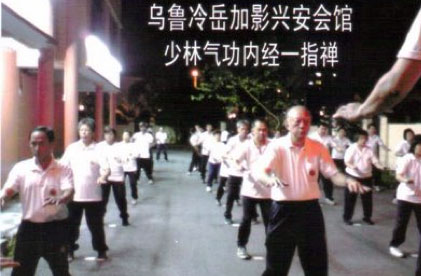
Our Shaolin Nei Jing Yi Zhi Chan Standing Meditation Method shows how to use a refined stance to clear Qi channels and settle the mind. You do not need a full Shaolin practice for this routine, but you can borrow the same principles of rooted legs, soft chest, and quiet eyes.
- Stand in Wuji, close your eyes halfway, and keep the gaze soft.
- Let arms hang by your sides or hold a gentle “hugging the tree” posture in front of the chest.
- Notice breath, heartbeat, and subtle sensations of Chi without trying to control them.
Even a couple of minutes of this kind of standing Meditation can feel like you have reset your emotional baseline. Many people in 2026 find this more approachable than seated Meditation, especially if they are restless or short on time.
7. How Much Morning Qigong Do You Need For Results?
A big question in 2026 is “what is the minimum effective dose” of any self care routine. For Qigong and Tai Chi, recent research suggests you can see lower stress and better sleep with just a few short sessions per week if you stay consistent.
| Practice Level | Suggested Morning Time | Weekly Goal |
|---|---|---|
| Beginner | 5 to 10 minutes | 4 to 5 mornings per week |
| Intermediate | 10 to 15 minutes | 5 to 6 mornings per week |
| Advanced / Neigong focus | 20+ minutes | Daily, plus an evening session if desired |
Short daily practice tends to beat long, occasional sessions for regulating stress and building Qi. Remember that our Free Qigong and Neigong training and in depth blog content can help you fine tune duration, intensity, and progressions without guessing.
Did You Know?
A systematic review found that Qigong therapy significantly reduces perceived stress overall, with an odds ratio of -0.60 in favor of Qigong.
Source: Qigong Therapy for Stress Management
8. Connecting Qigong With Yoga, Chakra Work And Meditation
Many of our students already practice Yoga or Meditation and want to know how Qigong fits into their routine. The good news is that Qigong, Neigong, Chakra practices, and seated Meditation all complement each other instead of competing.
For example, you might use the simple 5-step morning Qigong sequence to wake up your body and Energy, then sit for 5 minutes in quiet breath based Meditation. If you work with Chakras, you can focus awareness on the heart Chakra while doing the “open and close the chest” movement or on the third eye while holding a quiet standing posture.
We see Qigong as a bridge between movement and Meditation, perfect for days when you feel too restless to sit and too tired for intense Yoga flows.
Our fundamentals catalog includes options that lean more toward subtle inner work, which can feel very similar to advanced Yogic Pranayama and energy channel work.

9. Courses And Resources To Support Your Morning Qigong Habit
If you enjoy the simple routine above, structured guidance can help you refine details like alignment, breath pattern, and subtle Energy cues. In 2026 we see a lot of people starting with free materials, then moving into focused courses once they feel the benefits.
Our fundamentals and advanced offerings
- Qigong 101 is listed at $0.00, created to give you a solid base in posture, breathing, and core concepts that support any morning routine.
- Tai Chi Ruler Qigong (around $20.00) offers a compact form that is ideal when you want a repeatable sequence for daily practice.
- Shaolin Nei Jing Yi Zhi Chan Qigong and the standing Meditation method (listed at $75.00 on one product version) give you a more advanced Neigong pathway once the basics feel natural.
We also maintain a rich blog where we break down specific techniques, share practice tips, and answer common questions about Qi, breathing, and stress management. Together with our Free Qigong and Neigong training, these resources make it simple to build a sustainable morning habit without feeling lost.
10. Troubleshooting: Common Morning Qigong Questions Answered
As you start practicing, a few questions tend to show up repeatedly, especially if you are new to any kind of Energy or Meditation work. We like to keep the answers simple so you can stay focused on experience rather than theory.
What if I do not feel any Qi at first?
This is very normal, especially in the first couple of weeks. Focus on relaxing your breath and joints, since physical relaxation usually comes before clear Energy sensations.
Can I practice if I wake up anxious or exhausted?
Yes, in fact those are some of the best mornings to keep the routine gentle and short. You can always do just centering, belly breathing, and one flowing movement, and still give your nervous system a calmer starting point.
Morning Qigong vs night practice
Morning sessions tend to set your stress baseline for the day, while evening sessions help discharge whatever you picked up. Many of our students in 2026 like a quick morning lift and a slightly longer, slower evening sequence when time allows.
Conclusion
A simple 5 to 10 minute morning Qigong routine is one of the most realistic ways to cut stress, sleep better, and feel more centered in 2026. By combining basic alignment, belly breathing, joint circles, flowing arm movements, and a short standing Meditation, you give your body and mind a clear signal that the day can start from calm instead of chaos.
We are here to support that habit with Free Qigong and Neigong training, in depth blog content, and structured courses like Qigong 101 and Tai Chi Ruler Qigong when you are ready for more. Try the routine for a week, notice how your mornings and stress levels feel, and then decide how you want to deepen your Energy work from there.

No comments yet.